In the vibrant world of health and wellness, juicing stands out as a powerful way to infuse your body with essential nutrients. But for the serious enthusiast, not just any juicer will do. There’s one name that consistently rises above the rest, often hailed as “the Rolls Royce of juicers”: the Angel Juicer. With a reputation for unparalleled performance and uncompromising quality, it promises to transform your juicing experience. But does this premium machine truly live up to its lofty title, and more importantly, is it worth the significant investment? Let’s peel back the layers and discover what makes the Angel Juicer a class apart.
Understanding the Angel Juicer: A Class Apart
The Angel Juicer isn’t merely an appliance; it’s an engineering marvel designed for maximum nutritional extraction. Its “Rolls Royce” moniker isn’t just about the hefty price tag; it’s a testament to its construction, efficiency, and the superior quality of juice it produces. At its core, the Angel Juicer is a twin-gear masticating juicer, a category renowned for its cold-press methodology. This means it operates at a remarkably low speed, typically around 80-82 revolutions per minute (RPM).
This slow, deliberate crushing and pressing action is critical. Unlike centrifugal juicers that rapidly spin and generate heat, the Angel’s twin gears minimize oxidation and heat buildup. This meticulous process ensures that vital enzymes, vitamins, and minerals remain intact, yielding a juice that is not only richer in nutrients but also boasts a longer shelf life and a more vibrant flavor profile. Every component, from its gears to its housing, is crafted from high-grade stainless steel, ensuring purity and preventing any contact with plastic.
Angel Juicer Models: 5500, 7500, and 8500S Compared
While all Angel Juicer models share the same fundamental twin-gear design, powerful motor, and exceptional juicing performance, subtle differences exist, primarily in their stainless steel grade and convenience features. Understanding these distinctions can help you choose the perfect fit for your needs.
| Feature | Angel Juicer 5500 | Angel Juicer 7500 | Angel Juicer 8500S |
|---|---|---|---|
| Stainless Steel | SUS-304 (Food-Grade) | SUS-304 (Food-Grade) | SUS-316 (Surgical-Grade) |
| Auto-Reverse | Manual | Yes | Yes |
| Primary Use | Standard juicing | Enhanced convenience | Ultimate hygiene & corrosion resistance |
| Typical Price | ~$1,550 – $1,750 USD | ~$1,680 – $1,880 USD | ~$2,210 – $2,550 USD |
The Angel Juicer 5500 serves as the standard, foundational model. It requires manual activation of the reverse function if a blockage occurs. The Angel Juicer 7500 elevates convenience with an automatic reverse function, which intelligently detects clogs and reverses the gears momentarily to clear them, streamlining your juicing process. The top-tier Angel Juicer 8500S incorporates this auto-reverse feature but distinguishes itself with its primary juicing components (gears, housing, screens) being made from SUS-316 surgical-grade stainless steel. This higher-grade steel offers superior corrosion resistance and ensures the highest level of purity for your juice.
Additionally, Angel offers “SFH” (Soft Fruit Housing) versions for each model. These come with a specialized soft fruit housing filter alongside the standard one, optimizing the juicer’s performance for softer produce like berries, pineapples, and tomatoes.
Unrivaled Performance: What Sets Angel Apart
When it comes to extracting juice, the Angel Juicer truly stands in a league of its own. Its performance metrics are what convert skeptics into lifelong enthusiasts.
Exceptional Juice Yield
|
Our Picks for the Best Juicer in 2026
As an Amazon Associate I earn from qualifying purchases.
|
||
| Num | Product | Action |
|---|---|---|
| 1 | Ninja NeverClog Cold Press Juicer, Powerful Slow Juicer with Total Pulp Control, Countertop, Electric, 2 Pulp Functions, Dishwasher Safe, 2nd Generation, Blue/Navy, JC151NV |

|
| 2 | Juicer Machines, Juilist 3\" Wide Mouth Juicer Extractor Max Power 800W, for Vegetable and Fruit with 3-Speed Setting, 400W Motor, Easy to Clean |
|
| 3 | Hamilton Beach Juicer Machine, Big Mouth 3” Feed Chute for Whole Fruits and Vegetables, Easy to Clean, Centrifugal Extractor, Vegetable & Fruit Juicer, BPA Free, 800W Motor, Black |
|
| 4 | Qcen Juicer Machine, 800W Centrifugal Juicer Extractor with Wide Mouth 3” Feed Chute for Fruit Vegetable, Easy to Clean, Stainless Steel, BPA-free (Black) |
|
| 5 | Cold Press Juicer Machines with 5.8\" Large Feed Chute, Juicer for Whole Vegetables & Fruits, High Juice Yield (Grey) |
|
| 6 | Qcen Juicer Machine, 500W Centrifugal Juicer Extractor with Wide Mouth 3” Feed Chute for Fruit Vegetable, Easy to Clean, Stainless Steel, BPA-free (Black) |
|
| 7 | Juicer Machines with 5.8\" Large Feed Chute, Cold Press Juicer for Whole Vegetables and Fruits 400W, Slow Masticating juicer Easy to Clean Juice Extractor Machine High Juice Yield |
|
| 8 | Ninja NeverClog Cold Press Juicer, Powerful Slow Juicer with Total Pulp Control, Countertop, Electric, 2 Pulp Functions, Dishwasher Safe, 2nd Generation, Charcoal, JC151 |
|
| 9 | AMZCHEF Cold Press Juicer, Juicers Machines - 5.4\" Large Feed Chute for Whole Fruits & Vegetables, Stainless Steel Slow Masticating Juice Easy to Clean, Large Auger, Triple Strainers |
|
| 10 | Juicer Machines, 5.3\" Wide Feed Chute Cold Press Juicer for Whole Vegetables & Fruits, High Juice Yield, BPA Free (Slivery) |
|
One of the most striking features of the Angel Juicer is its incredible efficiency. It consistently produces a remarkably high yield of juice, leaving behind pulp that is astonishingly dry. This isn’t just an aesthetic detail; it translates directly into less waste and more savings on produce over time. Whether you’re processing fibrous leafy greens, tough wheatgrass, or dense carrots, the twin gears meticulously squeeze every last drop of liquid, ensuring you get the most out of your ingredients.
Nutrient Preservation
The slow, cold-press mastication process is the cornerstone of the Angel Juicer’s health benefits. By operating at a low RPM, it significantly reduces heat and air exposure, which are the primary culprits behind nutrient degradation and oxidation in juice. This meticulous approach means your Angel-pressed juice retains a higher concentration of live enzymes, vitamins, and minerals, making it a more potent and beneficial health elixir compared to juice from faster, heat-generating machines. Many users report a noticeably purer, fresher taste that reflects this preserved nutritional integrity.
Versatility for All Produce
The Angel Juicer is a versatile workhorse, excelling across a wide spectrum of fruits and vegetables. It’s particularly celebrated for its unparalleled ability to juice leafy greens like kale, spinach, and wheatgrass, which often challenge lesser machines. Hard vegetables such as carrots and beets are handled with ease, yielding dense, richly colored juices. While it performs admirably with a broad range of produce, softer fruits might require pairing with harder ingredients or using an optional soft fruit housing to optimize the juicing process and prevent backups. Beyond juice, with optional attachments, the Angel can also venture into making nut butters and sorbets, expanding its utility in a health-conscious kitchen.
Design, Durability, and Build Quality
The Angel Juicer’s reputation as the “Rolls Royce” isn’t solely based on its performance; it’s deeply rooted in its uncompromising design and superior build quality.
Constructed almost entirely from either SUS-304 or SUS-316 surgical-grade stainless steel, this juicer exudes a sense of solidity and premium craftsmanship. This all-stainless-steel construction ensures that no plastic components come into contact with your juice, offering maximum hygiene and peace of mind about chemical leaching. The choice of material also contributes significantly to its longevity; these machines are built in South Korea with precision engineering and are designed to withstand decades of daily use, making them a true legacy appliance in your kitchen.
While its robust construction signals durability, it also means the Angel Juicer is a substantial piece of equipment. It has a notable footprint and considerable weight, so it’s best suited for kitchens with dedicated counter space where it can remain easily accessible. Its elegant, minimalist stainless steel aesthetic, however, allows it to seamlessly integrate into most modern kitchen designs.
The Investment: Justifying the Angel Juicer’s Price Tag
Let’s address the elephant in the room: the Angel Juicer comes with a premium price tag that often gives prospective buyers pause. With models ranging from approximately $1,550 to over $2,500 USD, it represents a significant upfront investment. However, many owners argue that this cost is justified and, in the long run, even economically sensible.
> “While the upfront cost of an Angel Juicer is higher than many other juicers, its performance, durability, and efficiency make it a cost-effective choice in the long run. Think of it as an investment in your health and kitchen—a reliable appliance that consistently delivers exceptional results.” – Juicerville.ca Review
The high juice yield directly translates to less produce waste, meaning you get more juice from the same amount of fruits and vegetables compared to less efficient juicers. Over months and years, these savings on produce can add up significantly, offsetting a portion of the initial cost. Furthermore, its unparalleled durability means it’s a one-time purchase designed to last for decades, unlike cheaper models that may require frequent replacements or repairs.
Ultimately, for many, the investment in an Angel Juicer is an investment in their health. The superior nutrient preservation means you are consistently consuming the highest quality, most beneficial juice possible. When viewed through the lens of long-term health, reduced medical costs, and an appliance that holds its value remarkably well (even demonstrating strong resale value), the Angel Juicer’s price begins to align with its perceived value.
User Experience: Pros and Cons
Like any sophisticated appliance, the Angel Juicer offers a distinct user experience with its own set of advantages and minor drawbacks.
The Upsides:
- Superior Juice Yield and Quality: Consistently extracts more juice with drier pulp, yielding nutrient-dense, flavorful beverages.
- Exceptional for Leafy Greens: Unrivaled performance with wheatgrass, kale, spinach, and other fibrous vegetables.
- Durable, All-Stainless Steel Construction: Built to last for decades, ensuring no plastic contact with your juice.
- High Nutrient Retention: Slow masticating cold-press technology minimizes oxidation and preserves enzymes.
- Quiet Operation: Quieter than many centrifugal juicers, making for a more pleasant experience.
- Easy Assembly: Despite its robust nature, the parts are straightforward to assemble.
The Downsides:
- High Initial Cost: The most significant barrier for many, requiring a substantial upfront investment.
- Time-Consuming Cleaning: While assembly is easy, cleaning can be more involved, especially the long screen housing with its recessed areas. Immediate cleaning is crucial to prevent dried pulp buildup.
- Effort for Hard Produce: Requires some physical effort to push harder ingredients like carrots through the relatively narrow feed chute.
- Soft Fruit Limitations: Can sometimes struggle with very soft, mushy fruits when juiced exclusively without harder produce to aid propulsion, though SFH models mitigate this.
- Large Footprint: Requires dedicated counter space due to its size and weight.
- Warranty Nuances: While the motor and gears typically have a generous warranty, wear-and-tear items are often not covered.
Maximizing Your Angel Juicer: Usage and Cleaning Tips
To get the most out of your Angel Juicer and ensure its longevity, proper usage and diligent cleaning are paramount.
Juicing for Optimal Results
- Preparation is Key: Always wash your produce thoroughly. For hard fruits and vegetables, cut them into manageable pieces, roughly 1-inch diameter and no longer than 4 inches, to facilitate smooth feeding and prevent strain on the motor. Remove any hard pits or large seeds. While most skins can be juiced for added nutrients, consider peeling citrus to avoid bitterness.
- Feed Slowly and Steadily: The Angel is a slow juicer for a reason. Don’t overload the machine by pushing too much produce too quickly. Allow the twin gears to thoroughly process each piece before adding the next. This prevents clogs and maximizes juice extraction.
- Utilize Reverse Function: If the juicer ever clogs or jams, the reverse function (manual on 5500, automatic on 7500/8500S) is your friend. It helps dislodge stuck produce, allowing you to continue juicing without disassembly.
- Alternate Produce: For a balanced juicing session, alternate between soft and hard ingredients. Harder produce helps push softer items through, improving efficiency.
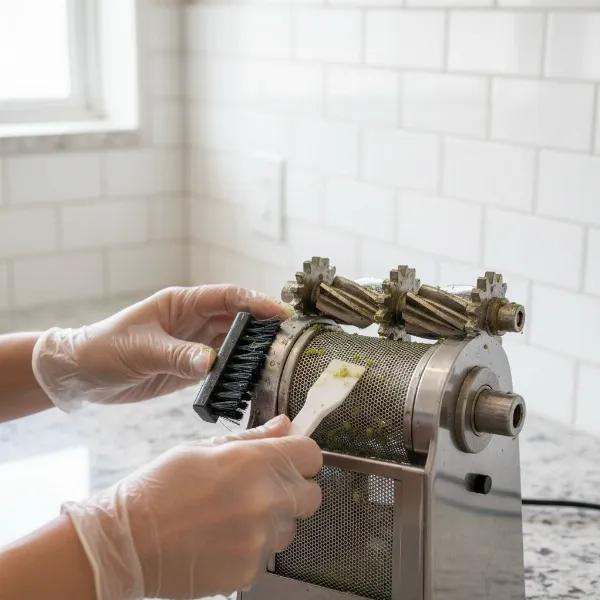 A person demonstrating the thorough cleaning of Angel Juicer twin gears and screen housing using the provided brush and scraper
Essential Cleaning and Care
- Clean Immediately: This is the most crucial tip. Dried pulp is significantly harder to remove. As soon as you finish juicing, disassemble the components.
- Disassembly: The Angel Juicer typically breaks down into four main parts: the main body, the twin gears, the screen housing, and the pulp/juice containers.
- Basic Cleaning: Rinse all detachable parts under warm running water. Use the provided cleaning brush and stainless steel scraper to remove any stuck pulp or fibers from the gears and the fine mesh of the screen housing. The scraper is especially helpful for the screen.
- Deep Cleaning for Build-up: Over time, a translucent film or mineral residue might develop. For this, you can:
- Baking Soda Method: Soak the housing and augers overnight in a solution of 1 tablespoon baking soda per liter of water, then scrub.
- Lemon/Vinegar Method: Juice 2-3 lemons (with peel) in the juicer. Then, remove parts and soak them in warm water for a few hours before scrubbing. For tougher spots, spray with white vinegar, let soak briefly, then sprinkle baking soda and gently scrub the foaming mixture.
- Drying: Ensure all parts are completely dry before reassembling or storing to prevent water spots or rust. Never submerge the motor base in water; simply wipe it down with a damp cloth.
Where to Purchase Your Angel Juicer
Investing in an Angel Juicer means choosing a premium product, and where you purchase it matters. It’s recommended to buy from authorized dealers or reputable online stores specializing in high-end juicers. This ensures you receive an authentic product, access to full warranty coverage, and reliable customer support.
Always verify the warranty details and return policies before making a purchase. While the Angel Juicer is incredibly durable, having strong customer service and a clear warranty for components like the motor and gears provides additional peace of mind for such a significant investment.
Buying Guide: Is an Angel Juicer Right for You?
Deciding if an Angel Juicer is the right choice involves a careful assessment of your juicing habits, lifestyle, and budget.
- Assess Your Juicing Needs:
- What do you juice most? If your primary focus is on leafy greens, wheatgrass, celery, and hard vegetables, the Angel Juicer excels. If soft fruits are your absolute priority, consider the SFH models or be prepared to alternate with harder produce.
- How often do you juice? For daily or frequent juicers, the efficiency and superior juice quality of the Angel make the investment more worthwhile over time. For occasional juicers, a less expensive model might suffice.
- Consider Your Budget: Be realistic about the upfront cost. Factor in the long-term savings on produce and the durability of the machine. It’s an investment, not a casual purchase.
- Commitment to Cleaning: While not overly complex, the cleaning process requires immediate attention after each use to maintain performance and hygiene. Are you willing to dedicate a few minutes to proper cleaning each time?
- Space Availability: Ensure you have adequate counter space in your kitchen for this robust and somewhat bulky appliance.
- Read Reviews and Consult Experts: While this review provides comprehensive insights, also consider other user experiences and expert opinions to round out your decision-making process.
By carefully evaluating these points, you can determine if the Angel Juicer aligns with your health goals and practical needs, ensuring it becomes a valuable addition to your wellness journey.
Conclusion
The Angel Juicer truly earns its reputation as the “Rolls Royce of Juicers.” Its commitment to all-stainless-steel construction, twin-gear masticating technology, and exceptional juice yield sets a gold standard for quality and nutritional integrity. While the initial investment is substantial, its unparalleled durability and the superior health benefits derived from its highly efficient extraction often justify the cost for dedicated juicing enthusiasts. It’s a machine designed to last, to perform, and to elevate your daily dose of vitality.
If you’re serious about maximizing your nutrient intake, minimizing waste, and investing in a premium appliance that will serve your health for years to come, the Angel Juicer stands as an undeniable leader. Are you ready to experience the difference a truly exceptional juicer can make?
Frequently Asked Questions
Why is the Angel Juicer so expensive?
The Angel Juicer’s high price stems from its premium all-stainless-steel construction, including its powerful twin gears, and its meticulous South Korean engineering. It’s designed for extreme durability and exceptional juice extraction, resulting in higher yields and nutrient preservation, which translates to long-term value and savings on produce.
Is the Angel Juicer hard to clean?
Cleaning the Angel Juicer requires immediate attention after use. While assembly is straightforward, thoroughly cleaning the screen housing can be time-consuming due to its fine mesh. However, with the included tools and consistent cleaning, it can be managed efficiently to prevent pulp buildup.
What’s the difference between Angel Juicer models?
All Angel Juicer models (5500, 7500, 8500S) offer the same core juicing performance. The key differences are the auto-reverse function (manual on 5500, automatic on 7500 and 8500S) and the grade of stainless steel (SUS-304 for 5500/7500, SUS-316 surgical-grade for the juicing parts of the 8500S).
Can the Angel Juicer juice soft fruits?
Yes, the Angel Juicer can juice soft fruits. For optimal results, it’s often recommended to alternate soft fruits with harder produce to help push them through the gears. Specialized Soft Fruit Housing (SFH) attachments are also available to enhance performance with softer ingredients like berries and pineapples.
How long do Angel Juicers last?
Angel Juicers are renowned for their exceptional durability and are often considered a lifetime investment. Constructed from high-grade stainless steel, they are built to withstand heavy daily use for decades, with many users reporting their machines performing reliably for 10-15 years or more with proper care.