Have you ever wondered about the origins of that vibrant glass of juice you enjoy? Far from being a recent fad, juicing boasts a rich and fascinating history, deeply intertwined with humanity’s quest for health and vitality. This journey, which began with ancient practices, was profoundly shaped by pioneering figures like Dr. Norman Walker and continues to evolve with cutting-edge technology today.
Juicing is more than just a culinary technique; it’s a testament to human ingenuity in seeking nourishment and healing from nature. From simple mashing to sophisticated cold-press systems, the evolution of juicing mirrors our growing understanding of nutrition and wellness. This article delves into the captivating timeline of juicing, highlighting key innovations and influential figures who paved the way for the diverse world of juicers we know today.
The Ancient Roots of Juicing
The concept of extracting liquids from fruits and vegetables for sustenance and health benefits is not a modern invention. Evidence suggests that early civilizations intuitively understood the value of concentrated plant essences. As far back as 150 BC, ancient texts like the Dead Sea Scrolls indicate that groups such as the Essenes mashed pomegranates and figs, likely to harness their invigorating properties. This rudimentary form of juicing laid the groundwork for future advancements, demonstrating an early recognition of the potency locked within raw produce. Herbalists and health practitioners throughout history also utilized grating and grinding methods to press out the active compounds from herbs and soft fruits for therapeutic purposes.
Norman Walker: The Father of Modern Juicing
The modern juicing movement owes a significant debt to Dr. Norman Wardhaugh Walker, often regarded as the “father of modern juicing.” Born in Italy in 1886, Walker was a British businessman and a zealous advocate for raw vegetable and fruit juices. His personal health struggles as a young man spurred his deep dive into the healing potential of fresh juices, leading him to believe that consuming raw, living foods was paramount for vitality.
Walker’s most significant contribution was his extensive research into the health benefits of fresh juices and, crucially, the invention of the Norwalk Hydraulic Press Juicer in 1936. This groundbreaking machine combined a grinding mechanism with a hydraulic press, effectively separating juice from pulp while preserving vital nutrients and enzymes. The Norwalk made juicing accessible on a wider scale than ever before, marking a pivotal moment in its history. Dr. Walker’s influence extended through numerous books on nutrition and healthy living, published from 1936 to 1981, solidifying his legacy as a pioneer in the field. It’s worth noting that while popular myths claim Walker lived to be over a hundred, official records indicate he lived to a healthy 99 years old, maintaining physical and mental activity until his peaceful passing.
“Dr. Norman Walker believed that living foods, particularly raw vegetable juices, held the key to vibrant health and longevity, a philosophy that continues to inspire juicing enthusiasts today.”
The Rise of Modern Juicing Technology
Following Walker’s innovations, the mid-20th century saw a rapid evolution in juicer technology, driven by an increasing interest in health and wellness.
Centrifugal Juicers
|
Our Picks for the Best Juicer in 2026
As an Amazon Associate I earn from qualifying purchases.
|
||
| Num | Product | Action |
|---|---|---|
| 1 | Qcen Juicer Machine, 800W Centrifugal Juicer Extractor with Wide Mouth 3” Feed Chute for Fruit Vegetable, Easy to Clean, Stainless Steel, BPA-free (Black) |

|
| 2 | Juicer Machines with 5.8" Large Feed Chute, Cold Press Juicer for Whole Vegetables and Fruits 400W, Slow Masticating juicer Easy to Clean Juice Extractor Machine High Juice Yield |
|
| 3 | Zulay Kitchen Cast Iron Juicer - Easy-to-Clean Heavy-Duty Manual Juicer, Professional Citrus Juicer - Stainless Steel Lemon Squeezer - Manual Citrus Press & Orange Squeezer - Orange Juicer (Black) |
|
| 4 | Juicer Machines, Juilist 3" Wide Mouth Juicer Extractor Max Power 800W, for Vegetable and Fruit with 3-Speed Setting, 400W Motor, Easy to Clean |
|
| 5 | BLACK+DECKER 32oz Electric Citrus Juicer, CJ625, Pressure Activated, Adjustable Pulp Control, Dishwasher-Safe |
|
| 6 | Cold Press Juicer, Juicer Machines with 5.4" Wide Feed Chute for Juice Extractor, Professional Slow Masticating Juicer for Whole Vegetables & Fruits with High Juice Yield, Easy to Clean (Black) |
|
| 7 | Qcen Juicer Machine, 500W Centrifugal Juicer Extractor with Wide Mouth 3” Feed Chute for Fruit Vegetable, Easy to Clean, Stainless Steel, BPA-free (Black) |
|
| 8 | Magic Bullet Mini Juicer with Cup, Black and Silver |
|
| 9 | juicer machines with 5.8" Large Feed Chute, Slow masticating cold press juicer for Whole Fruits & Vegetables, easy to clean Design, High Juice Yield Home juicer for Daily Wellness |
|
| 10 | Ninja NeverClog Cold Press Juicer, Powerful Slow Juicer with Total Pulp Control, Countertop, Electric, 2 Pulp Functions, Dishwasher Safe, 2nd Generation, Charcoal, JC151 |
|
The 1950s ushered in the era of centrifugal juicers, which quickly gained popularity in households due to their convenience and speed. These machines operate by grating produce with a flat blade disc at high speeds, then spinning the pulp against a mesh filter to extract juice. While efficient, a drawback of centrifugal juicers is the heat generated during the high-speed extraction process. This heat can potentially degrade heat-sensitive enzymes and nutrients, leading to a less nutritionally dense juice compared to slower methods. They are also often louder than other types and tend to produce more foam.
Masticating (Slow) Juicers
A significant advancement came with the invention of the Champion machine around the mid-1950s, which was the first masticating juicer. Masticating juicers, often called “slow juicers” or “cold press juicers,” operate by slowly crushing and pressing fruits and vegetables, mimicking a chewing action. This gentle process minimizes heat buildup and oxidation, helping to preserve enzymes, vitamins, and minerals.
The technology continued to improve:
- Single-auger masticating juicers became well-established, offering better nutrient retention and higher yields than centrifugal models.
- In 1993, the first twin-gear juicer, such as the Greenpower juicer, was introduced. These machines use two interlocking gears to grind produce even more finely, extracting maximum nutrients based on principles similar to an ancient mortar and pestle.
- Around 2008, a “paradigm shift” occurred with the development of vertical slow juicers by companies like Kuvings and Hurom. These designs made masticating juicers more compact and efficient, making them practical for smaller kitchen countertops and increasing juice production rates.
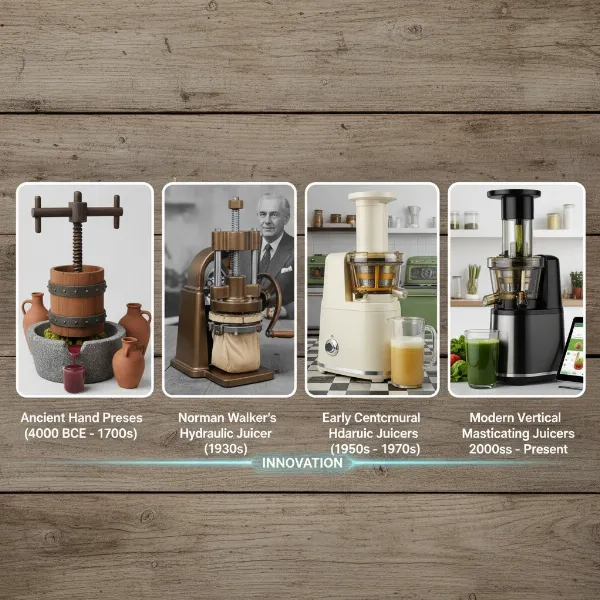 Illustration depicting the evolution of juicers from ancient presses to modern slow masticating models.
Hydraulic Press Juicers (Modern Adaptation)
Modern hydraulic press juicers are essentially sophisticated descendants of Norman Walker’s Norwalk machine. They involve a two-step process: first, grinding the produce into a fine pulp, and then applying immense hydraulic pressure to extract the juice. This method yields the highest amount of nutrient-rich juice with minimal heat, making them a top choice for those seeking maximum nutritional value and enzyme preservation. While often more expensive and less common for home use, they represent the pinnacle of cold-press technology.
Juicing’s Journey into the Mainstream
Beyond technological advancements, juicing gained widespread popularity through various cultural shifts and public figures. The “Juice of Life” movement emerged in the 1930s, embracing juice cleansing and fasting within health and wellness communities.
- Mid-20th Century: Dr. Max Gerson’s therapy, which used fresh fruit and vegetable juices as a central part of a holistic approach to healing, further popularized the concept.
- 1960s-1970s: Pioneers like Jay Kordich, famously known as the “Juiceman,” championed juicing through books, television shows, and demonstrations, bringing its benefits to a broader audience. The emergence of the first juice bars, such as David Otto’s Beverly Hills Juice Club in California in 1975, marked the beginning of a public appetite for freshly prepared juices.
- 1990s and Beyond: The “juice cleanse” trend gained significant momentum, especially among celebrities and health-conscious individuals, solidifying juicing as a detox method. The rise of social media and the internet in the 2000s further amplified the sharing of recipes and health information, democratizing juicing knowledge and trends. Brands like Jamba Juice expanded nationally, bringing juice bars to mainstream recognition.
Choosing the Right Juicer: A Historical Perspective
Understanding the history of juicing also provides valuable insight into selecting the right machine for your needs today. The evolution from simple reamers to complex cold presses highlights a continuous drive for efficiency, nutrient preservation, and convenience.
- For Maximum Nutrient Preservation: If your priority aligns with Norman Walker’s philosophy of “living foods” and enzyme preservation, a masticating (slow) juicer or a hydraulic press juicer is ideal. These machines operate at lower speeds, reducing heat and oxidation, ensuring your juice retains more of its delicate nutrients. Consider their typically higher price point and slower processing time.
- For Speed and Convenience: If you prioritize quick preparation and easy cleanup for your daily juice, a centrifugal juicer might be more suitable. While they may sacrifice some nutrient integrity due to heat, they are generally more affordable and faster, perfect for busy lifestyles.
- For Specific Produce: Some juicers excel with certain types of produce. Masticating juicers are often better for leafy greens and wheatgrass due to their grinding action, while centrifugal juicers handle harder fruits and vegetables well.
Ultimately, your choice reflects how you value the historical advancements in juicing—balancing the speed of modern life with the timeless pursuit of optimal nutrition.
Conclusion
The history of juicing is a testament to humanity’s enduring fascination with natural health. From ancient methods of extracting vital essences to Dr. Norman Walker’s pioneering Norwalk Hydraulic Press Juicer, and onward to today’s diverse array of centrifugal, masticating, and vertical slow juicers, the journey has been one of continuous innovation. Each step in this evolution has brought us closer to understanding and harnessing the profound benefits of fresh fruit and vegetable juices.
As juicing continues to intertwine with global wellness trends, its rich past serves as a reminder of the foundational principles laid by visionaries like Norman Walker—emphasizing the power of raw, living foods. Whether you’re a seasoned juicer or just beginning your journey, knowing this history enriches every glass you pour. What aspect of juicing’s incredible history resonates most with you?
Frequently Asked Questions
What was Norman Walker’s main contribution to juicing?
Norman Walker is primarily known for his extensive research on the health benefits of fresh, raw vegetable and fruit juices. His most significant contribution was the invention of the Norwalk Hydraulic Press Juicer in 1936, which revolutionized juice extraction by using a two-step grind and press method to maximize nutrient preservation.
How do modern slow juicers relate to Norman Walker’s original machine?
Modern slow (masticating) juicers, especially twin-gear and hydraulic press models, share Norman Walker’s core principle of preserving enzymes and nutrients by minimizing heat and oxidation during extraction. While Walker’s Norwalk was a hydraulic press, today’s masticating juicers use a similar slow, grinding, and pressing action, albeit with different mechanical designs, to achieve a high-quality, nutrient-dense juice.
When did juicing become widely popular?
Juicing began to gain wider recognition in the 1930s with Norman Walker’s innovations and the “Juice of Life” movement. Its popularity surged significantly from the 1960s onward, fueled by health movements, pioneers like Jay Kordich, the introduction of home juicing machines in the 1970s and 80s, and the rise of juice bars and celebrity endorsements in the late 20th and early 21st centuries.