High-speed juicers offer a fantastic gateway to quick, delicious, and nutrient-packed beverages, transforming fresh produce into vibrant liquid in moments. Yet, with their incredible power and rapid rotation, these kitchen workhorses demand a healthy respect for safety. As a technician with over a decade of experience at JuicerBest.com, I’m here to share the crucial insights that ensure every juicing session is not only productive but also entirely safe. This comprehensive guide will equip you with essential knowledge for operating, maintaining, and even purchasing your high-speed juicer, safeguarding both your well-being and the longevity of your appliance.
Understanding High-Speed Juicers: Speed, Power, and Safety
High-speed juicers, often referred to as centrifugal juicers, operate by rapidly shredding fruits and vegetables with a flat cutting blade or grating disc that spins at thousands of revolutions per minute. The pulverized pulp is then flung against a mesh filter by centrifugal force, separating the juice from the fibrous material. This method offers unparalleled speed, making it ideal for busy mornings. However, the very characteristics that make them efficient – the high RPMs and razor-sharp blades – also introduce specific safety considerations.
In contrast, slow juicers (masticating juicers) extract juice by crushing and pressing produce at much lower speeds. While they might take longer, their slower, auger-based mechanism generally presents fewer immediate risks related to fast-moving sharp components or potential projectile ejection. For high-speed juicers, understanding and mitigating the inherent dangers associated with their powerful, fast-acting components is paramount for a worry-free juicing experience.
Crucial Safety Checks Before You Juice
Before you even think about plugging in your high-speed juicer, a few critical checks can prevent accidents and ensure smooth operation. Neglecting these initial steps is a common oversight that can lead to hazardous situations or damage to your appliance. Prioritizing these preliminary safety measures is the foundation of responsible juicer use.
Proper Assembly is Key
|
Our Picks for the Best Juicer in 2026
As an Amazon Associate I earn from qualifying purchases.
|
||
| Num | Product | Action |
|---|---|---|
| 1 | Ninja NeverClog Cold Press Juicer, Powerful Slow Juicer with Total Pulp Control, Countertop, Electric, 2 Pulp Functions, Dishwasher Safe, 2nd Generation, Charcoal, JC151 |

|
| 2 | Hamilton Beach Juicer Machine, Big Mouth 3” Feed Chute for Whole Fruits and Vegetables, Easy to Clean, Centrifugal Extractor, Vegetable & Fruit Juicer, BPA Free, 800W Motor, Black |
|
| 3 | Juicer Machines, Juilist 3\" Wide Mouth Juicer Extractor Max Power 800W, for Vegetable and Fruit with 3-Speed Setting, 400W Motor, Easy to Clean |
|
| 4 | Juicer Machines, 5.3\" Wide Feed Chute Cold Press Juicer for Whole Vegetables & Fruits, High Juice Yield, BPA Free (Slivery) |
|
| 5 | Juicer Machines with 5.8\" Large Feed Chute, Cold Press Juicer for Whole Vegetables and Fruits 400W, Slow Masticating juicer Easy to Clean Juice Extractor Machine High Juice Yield |
|
| 6 | Ninja NeverClog Cold Press Juicer, Powerful Slow Juicer with Total Pulp Control, Countertop, Electric, 2 Pulp Functions, Dishwasher Safe, 2nd Generation, Blue/Navy, JC151NV |
|
| 7 | AMZCHEF Cold Press Juicer, Juicers Machines - 5.4\" Large Feed Chute for Whole Fruits & Vegetables, Stainless Steel Slow Masticating Juice Easy to Clean, Large Auger, Triple Strainers |
|
| 8 | Cold Press Juicer Machines with 5.8\" Large Feed Chute, Juicer for Whole Vegetables & Fruits, High Juice Yield (Grey) |
|
| 9 | Qcen Juicer Machine, 800W Centrifugal Juicer Extractor with Wide Mouth 3” Feed Chute for Fruit Vegetable, Easy to Clean, Stainless Steel, BPA-free (Black) |
|
| 10 | Qcen Juicer Machine, 500W Centrifugal Juicer Extractor with Wide Mouth 3” Feed Chute for Fruit Vegetable, Easy to Clean, Stainless Steel, BPA-free (Black) |
|
Always ensure that all parts of your high-speed juicer are correctly and securely assembled before plugging it into an electrical outlet. Many modern juicers feature safety locking devices that prevent the motor from starting if components like the lid or pulp container are not perfectly aligned and locked into place. Familiarize yourself with these mechanisms, typically involving clamps or latches, and confirm they are fully engaged. A loosely assembled juicer can vibrate excessively, potentially causing parts to dislodge or juice to spill during operation.
Stable and Dry Environment
Always place your juicer on a flat, stable, and dry surface that can comfortably support its weight and withstand any minor vibrations during operation. Keeping the juicer on a steady countertop minimizes the risk of it tipping over. Crucially, ensure that the motor base, power cord, and plug are kept clear of any liquids to prevent electrical shock. Spills should be wiped up immediately, but only after the machine is turned off and unplugged.
Cord and Plug Integrity
Before each use, take a moment to inspect the power cord and plug for any signs of damage, such as fraying, cuts, or exposed wires. Never operate a juicer with a damaged cord or plug. Ensure the appliance is properly grounded, if applicable, and avoid letting the cord dangle over the edge of a counter where it could be snagged or pulled. If you notice burn marks, hear buzzing, or feel the plug is too hot, contact a qualified electrician or the manufacturer immediately. Investing in Residual Current Device (RCD) protection in your home can offer an additional layer of safety against electrical shocks.
The Power Button Off
It’s a simple yet vital habit: always confirm that your juicer’s power switch is in the “OFF” position before plugging it into a power outlet. This prevents accidental startups that could lead to injury or damage if components aren’t fully secured or if your hands are near the feed chute. This small action significantly reduces the risk of an unexpected jolt or movement from the appliance.
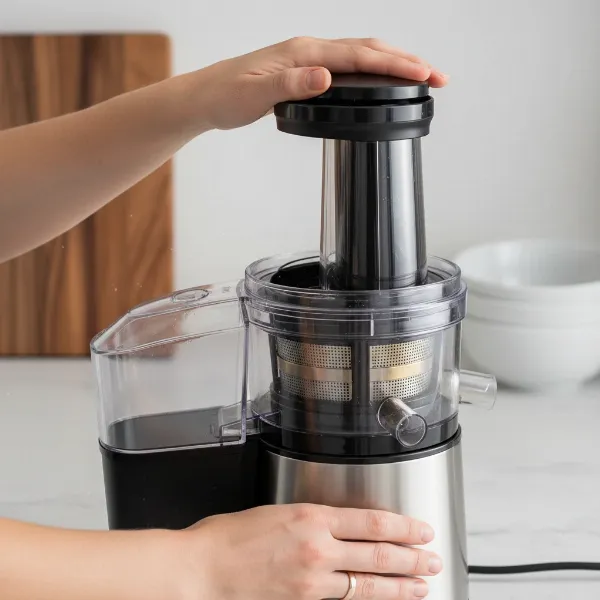 A person checking the assembly of a high-speed juicer on a kitchen counter, ensuring all parts are locked securely with a dry cloth nearby.
Best Practices for Safe High-Speed Juicer Operation
Once your high-speed juicer is prepped and ready, adherence to proper operating techniques is paramount. The powerful, rapidly spinning blades can cause serious injury if not handled with extreme caution. These best practices are designed to keep your hands safe, protect the appliance, and ensure a smooth juicing process.
Prepare Your Produce
Careful produce preparation contributes significantly to both safety and efficiency. Begin by thoroughly washing all fruits and vegetables under running water, even those you plan to peel, to remove dirt and bacteria. For items with large seeds or hard pits (like peaches, cherries, or plums), always remove them before juicing to prevent damage to the blades and motor. Similarly, peel tough skins from citrus fruits, pineapples, and mangoes, as these can be difficult for some juicers to process and may contain bitter compounds. Finally, chop larger fruits and vegetables into manageable pieces that fit comfortably down the feed chute without forcing them. This prevents blockages, reduces strain on the motor, and ensures a smoother juicing process. Avoid overfilling the feed chute at any time, as this can cause clogs and put undue stress on the machine.
Use the Food Pusher ONLY
This cannot be stressed enough: NEVER use your fingers or any other object (like a knife, fork, or spoon) to push produce down the feed chute while the juicer is operating. High-speed juicers have extremely sharp, fast-spinning blades that can cause severe injury in an instant. Always use the food pusher specifically provided by the manufacturer. If an item gets stuck, immediately turn off and unplug the juicer, wait for all moving parts to stop, then carefully remove the obstruction. Jamming foreign objects can damage the juicer’s internal components, leading to potential electrical hazards or compromised performance.
Mind the Motor’s Limits
High-speed juicers are designed for quick processing, but continuous, prolonged use can lead to motor overheating. Most manufacturers recommend operating the juicer for no more than 1-2 minutes continuously, especially when processing harder produce. If you have a large batch of ingredients, run the juicer in shorter intervals, allowing the motor to cool down between uses. Refer to your user manual for specific guidelines on continuous operation times. Overworking the motor can lead to premature wear, reduced efficiency, or even burnout.
Watch for Overload Signals
Pay attention to your juicer’s sounds and performance. If the motor sounds strained, begins to slow down significantly, vibrates excessively, or simply stops, these are clear indicators of an overload or blockage. Immediately turn off the juicer and unplug it. After waiting for all movement to cease, disassemble the unit to clear any obstructions or allow the motor to cool before attempting to resume. Ignoring these signals can cause damage to the motor or other critical components.
Cleaning and Maintenance: Protecting Your Investment and Your Safety
Regular and proper cleaning is not just about hygiene; it’s a fundamental aspect of high-speed juicer safety and extends the lifespan of your appliance. Dried pulp and juice residue can lead to blockages, reduced efficiency, and even damage. Knowing how to safely disassemble, clean, and reassemble your juicer is crucial.
Unplug Before Anything
The golden rule for any appliance maintenance, especially one with sharp moving parts, is to always switch off the juicer and unplug it from the power outlet before you begin any cleaning, disassembly, or reassembly tasks. This simple act eliminates the risk of accidental startup and potential electrical shock or injury.
Wait for a Complete Stop
After turning off the juicer, always wait until all moving parts, particularly the grating disc and internal components, have come to a complete and verifiable stop before attempting to open the lid or disassemble the unit. The momentum of the high-speed blade can continue for several seconds after the power is off, posing a significant hazard.
Immediate Cleaning
The easiest time to clean your juicer is immediately after use, before pulp and juice residues have a chance to dry and harden. Dried pulp can be notoriously difficult to remove from the fine mesh screen of a centrifugal juicer, potentially causing blockages and cracks if left to accumulate. Rinse detachable parts under warm, soapy water.
Handle Blades with Care
The grating disc of a high-speed juicer is incredibly sharp. Always handle it with extreme caution. Use the specialized cleaning brush often provided with your juicer to remove pulp from the mesh, avoiding direct contact with the cutting edges. Be gentle but thorough to clear all small fibers and particles.
Avoid Water Immersion
Never immerse the motor base of your juer in water or any other liquid. The electrical components housed within are highly sensitive to moisture. Instead, wipe the motor unit clean with a damp cloth, ensuring it is thoroughly dry before storing or subsequent use.
Material Sensitivity
Be mindful that some plastic parts, especially those with magnetic safety sensors, can be damaged by extremely hot or boiling water, potentially leading to warping or malfunction. Always follow your manufacturer’s specific cleaning instructions regarding water temperature and whether parts are dishwasher-safe.
Regular Inspections
Periodically inspect all removable parts, especially the mesh filter basket, for any signs of wear, cracks, or damage. A compromised filter can affect juicing efficiency and potentially become a safety hazard. If you notice any damage, consult the manufacturer for replacement parts or advice.
 A person carefully cleaning the sharp blade of a high-speed juicer with a brush under running water, highlighting safe cleaning practices.
Selecting a High-Speed Juicer with Safety in Mind
While operational practices are key, safety begins even before you make a purchase. Modern juicers often incorporate various features designed to protect the user. Being an informed consumer means looking beyond just juice yield and motor power to scrutinize the safety engineering of the appliance.
Safety Lock Mechanisms
Prioritize juicers equipped with robust and reliable safety lock mechanisms. These systems are designed to prevent the juicer from operating unless all components, such as the lid and pulp container, are correctly assembled and locked into their designated positions. Test these mechanisms if possible before purchasing, ensuring they feel secure and function smoothly. This is a primary defense against accidental contact with moving parts.
Durable, Food-Grade Materials
The quality of materials directly impacts both the longevity and safety of your juicer. Opt for models constructed from durable, food-grade plastics (like Tritan, which is BPA-free) and high-quality stainless steel. These materials are not only more resilient to wear and tear but also ensure that no harmful chemicals leach into your juice. Sturdy construction also means parts are less likely to break or warp, maintaining the machine’s structural integrity over time.
Overload Protection
Many advanced high-speed juicers include built-in overload protection systems. This feature automatically shuts off the motor if it detects an excessive load, such as from overfilling or attempting to juice overly hard ingredients. This prevents the motor from overheating or burning out, extending the life of your appliance and preventing potential fire hazards. This automatic shut-off can be a critical safeguard in busy kitchens.
Stable Design
A juicer’s base should be wide and heavy enough to provide excellent stability during operation. Look for models with non-slip feet that securely grip the countertop, minimizing movement and vibration when the powerful motor is running. A stable design is essential to prevent the juicer from “walking” across the counter or tipping over, especially during intense juicing tasks.
Reputable Brands and Warranties
Purchasing from reputable brands known for their commitment to quality and safety is always a wise decision. Established manufacturers typically adhere to stringent safety standards and offer comprehensive warranties. Registering your new juicer with the manufacturer ensures you’ll be contacted if any safety notices or recalls are issued. A good warranty also provides peace of mind, knowing that you have support if any issues arise.
Buying Guide: Prioritizing Safety in Your Juicer Purchase
Choosing the right high-speed juicer involves more than just selecting a model with an appealing design or a powerful motor. For a truly satisfying and secure juicing experience, safety considerations should be at the forefront of your decision-making process. This guide will help you navigate the options with safety as a primary criterion.
Assess Your Needs
Before diving into models, consider your personal juicing habits. What types of fruits and vegetables will you most often process? How frequently will you use the juicer? If you plan to juice very hard produce regularly, you’ll need a robust machine with strong motor protection. If ease of cleaning and quick daily use are priorities, look for designs that simplify disassembly and reassembly, which inherently contributes to safer handling.
Read User Manuals (Before Buying, if possible)
While not always feasible, if you can access the user manual online before purchasing, it’s highly recommended. The manual provides invaluable insight into the specific safety features, operational guidelines, and cleaning instructions for that particular model. This allows you to understand the real-world safety precautions required and how they align with your comfort level.
Review Safety Features
When comparing models, actively look for and compare their safety features. Pay close attention to the presence and robustness of safety locking systems, overload protection, and stability features like suction cups or heavy bases. Don’t hesitate to ask sales associates about these aspects. The more layers of protection a juicer offers, the safer your juicing experience will be.
Check Certifications
Look for relevant safety certifications or seals of approval from recognized electrical safety organizations. These certifications indicate that the product has been tested and meets specific safety standards. While not always outwardly visible, a reputable brand will usually highlight such compliance in their product specifications or on their packaging.
Consult Expert Reviews
Seek out objective reviews from trusted sources that discuss both performance and safety. While marketing materials highlight benefits, independent reviews often provide practical insights into ease of use, potential quirks, and how effectively safety features operate in real-world scenarios. Look for feedback regarding stability, ease of cleaning (especially the sharp parts), and any noted safety concerns.
Conclusion
High-speed juicers are incredible tools for boosting your health and enjoying fresh, vibrant juices daily. However, their efficiency comes with inherent power that demands respect and careful handling. By meticulously following safety guidelines, from ensuring proper assembly and mindful operation with the designated food pusher to diligent cleaning and maintenance, you actively safeguard yourself and extend the life of your appliance. Choosing a juicer with robust safety features further enhances this peace of mind. Embrace these practices, and you’ll unlock years of safe, delicious juicing experiences.
What essential safety tip have you learned from your own juicing journey?
Frequently Asked Questions
Can I put ice in a high-speed juicer?
Generally, high-speed juicers are not designed for ice. Introducing ice can damage the sharp blades and put undue strain on the motor, potentially leading to malfunction or breakage. Always refer to your specific model’s instruction manual to confirm if it can handle ice.
How do I know if my juicer has a safety lock?
Most modern high-speed juicers are equipped with visible locking clamps or mechanisms that must be securely engaged for the appliance to power on. If these components are not correctly aligned, the juicer will not start, acting as a crucial safety feature. Your user manual provides detailed information on these specific locking systems.
What should I do if food gets stuck in my high-speed juicer?
If you encounter a blockage, immediately turn off and unplug the juicer from the power outlet. Wait patiently for all internal parts to come to a complete stop before carefully disassembling the unit. Use the provided food pusher or a non-sharp utensil to gently remove the obstruction.
Why is it important to clean a high-speed juicer immediately after use?
Cleaning your juicer immediately after use is vital because it prevents pulp and juice residue from drying and hardening, especially on the fine mesh screen. Dried residue can be very difficult to remove, leading to blockages, reduced juicing efficiency, and potential damage to delicate components over time.
Can children use high-speed juicers?
Given the powerful motor and extremely sharp blades of high-speed juicers, they should primarily be operated by adults. If children are present, strict, direct adult supervision is absolutely necessary, and operation should always adhere to the manufacturer’s age and safety guidelines to prevent serious injury.
Is it safe to run a high-speed juicer for a long time?
Most high-speed juicers are designed for intermittent use, not continuous operation for extended periods. Running them for too long without a break can cause the motor to overheat, leading to potential damage or a shortened lifespan. Consult your specific juicer’s manual for recommended maximum continuous run times.
What are “unsuitable” fruits for a high-speed juicer?
Very soft, pulpy fruits such as bananas, avocados, and mangoes are generally unsuitable for high-speed (centrifugal) juicers because they tend to produce more puree than juice and can quickly clog the machine. Extremely hard, fibrous items like sugarcane may also be too challenging for some household models.