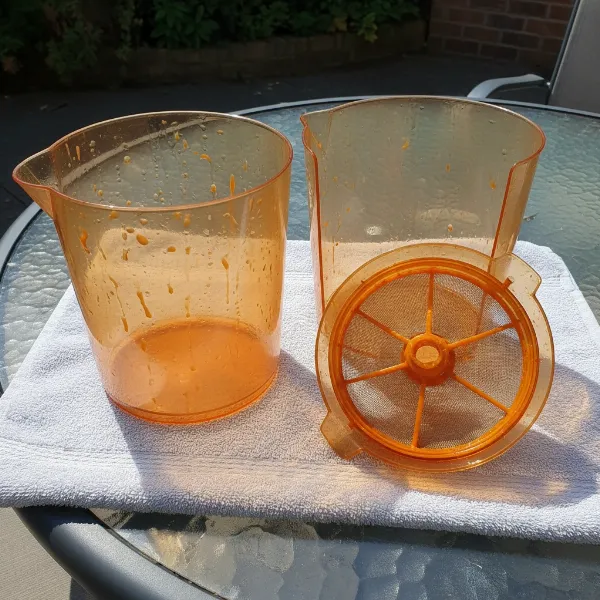
Your juicer is a vital tool for a healthy lifestyle, transforming fresh produce into nutrient-rich beverages. But like any frequently used appliance, its key components can experience wear and tear. One of the most critical, yet often overlooked, parts is the juicer screen. When this essential component degrades, it can significantly impact your juicer’s performance, leading to less efficient extraction, an abundance of pulp, and even strain on the motor. This comprehensive guide will walk you through the process of identifying a worn screen, replacing it with ease, and implementing best practices to extend its lifespan, ensuring your juicer continues to deliver perfect juice every time.
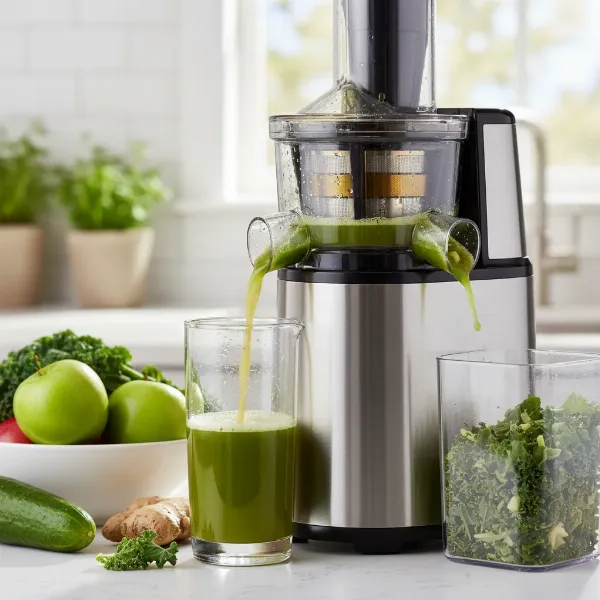 Close-up of a modern juicer highlighting the essential juicer screen.
Understanding Your Juicer Screen and Why it Wears Out
The juicer screen, sometimes called a filter basket or strainer, is designed to separate the liquid juice from the solid pulp, delivering a smooth, consistent drink. This seemingly simple component is engineered with fine mesh or tiny holes to achieve optimal separation. However, its constant contact with tough fruits and vegetables, along with continuous rotation or pressure, makes it susceptible to wear over time.
Different juicer types feature distinct screen designs. Centrifugal juicers, for example, typically use a mesh basket often integrated with shredding blades that spin at high speeds to extract juice. Masticating juicers, on the other hand, which include both horizontal and vertical slow juicers, feature a fine mesh screen that works in conjunction with an auger (or twin gears) to press and squeeze produce. Vertical masticating juicers often have wider screens, while horizontal models may feature a smaller sieve ring [cite: 1 (search 3)]. Regardless of the design, the primary causes of screen wear are consistent:
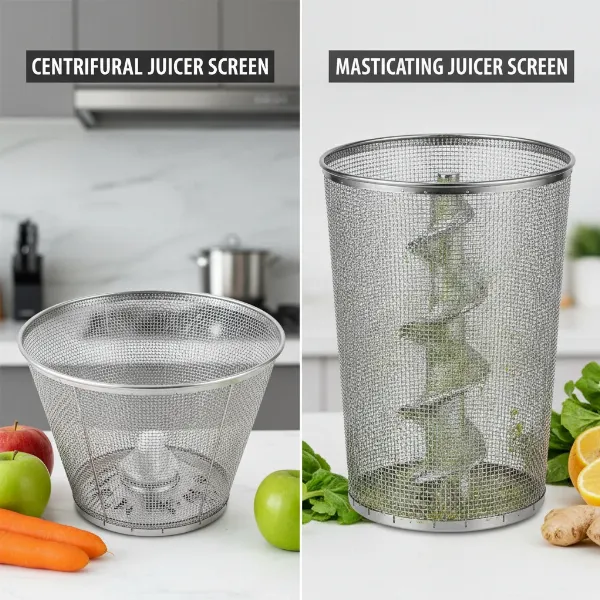 Comparative view of centrifugal and masticating juicer screens designs.
- Accumulated Pulp & Residue: If not cleaned immediately and thoroughly after each use, dried juice residue and limescale can build up in the fine mesh holes. This accumulation obstructs the flow of juice, causing pressure to build up inside the juicing chamber. This increased pressure is a leading cause of screen cracks [cite: 3 (search 5)].
- Overloading and Incorrect Use: Pushing too much produce into the juicer at once, or attempting to juice ingredients that are too hard or fibrous without proper pre-cutting, can put excessive stress on the screen. This forceful action can bend the mesh or even cause structural damage [cite: 4 (search 5), 5 (search 5)].
- Improper Cleaning Methods: While critical for longevity, incorrect cleaning can paradoxically harm the screen. Using boiling water can deform plastic components and even seals, affecting the screen’s fit and function [cite: 3 (search 5)]. Similarly, abrasive scrubbing with unsuitable tools can damage the delicate mesh.
- Natural Wear and Tear: Even with meticulous care, the constant friction and forces involved in juicing will eventually lead to material fatigue. Over months or years of regular use, the mesh can thin, warp, or develop small fractures.
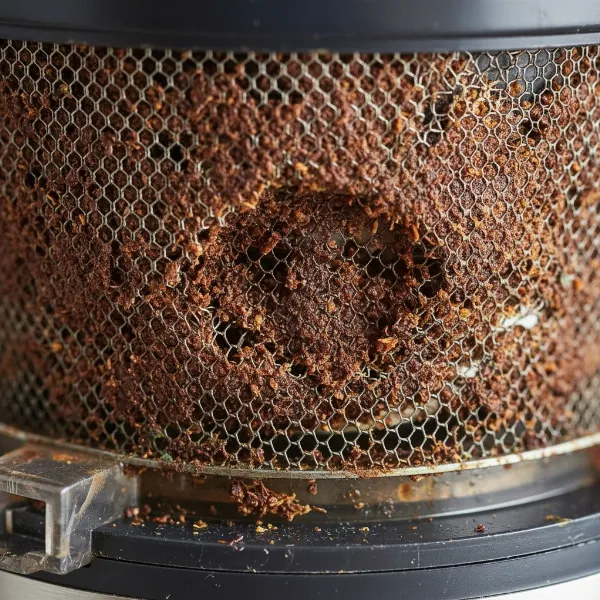 Detail of a heavily clogged and worn-out juicer screen with visible damage.
Signs You Need a New Juicer Screen
Recognizing the early warning signs of a failing juicer screen can save you from frustrating juicing experiences and potential damage to your entire machine. Pay attention to these indicators:
- Excessive Pulp in Your Juice: This is one of the most common and noticeable signs. If your juice suddenly contains more pulp than usual, it indicates that the screen’s filtering capability is compromised [cite: 4 (search 5)].
- Reduced Juice Yield: A worn or clogged screen struggles to extract juice efficiently. You might find yourself using more produce to get the same amount of juice, or the ejected pulp may feel wetter than normal.
- Visible Damage: Inspect your screen regularly for any physical imperfections. Look for cracks, tears in the mesh, bent components, or signs of corrosion, especially in metal screens [cite: 2 (search 1)]. For centrifugal juicers, dull or damaged extractor blades are also a red flag [cite: 2 (search 1)].
- Increased Motor Strain or Noise: When the screen’s holes become blocked or the screen itself is damaged, the motor has to work harder to push produce through. This can manifest as unusual noises, overheating, or the juicer struggling to process ingredients.
- Slow Juicing Process: If your juicer takes noticeably longer to process fruits and vegetables, it could be due to a clogged or damaged screen restricting the flow of juice [cite: 3 (search 5)].
- Persistent Clogs Despite Cleaning: If you regularly clean your screen but still find stubborn residue or blocked holes that impact performance, it might be beyond simple cleaning and require replacement [cite: 2 (search 5)].
“Dried juice residue or limescale can build up in the fine mesh of the juicing screen. As this accumulates, the holes in the screen become blocked, causing pressure to build up while juicing as there are less holes for the juice to flow. This pressure can cause the juicing screen to crack.” [cite: 3 (search 5)]
Hand holding a juicer screen up to light, inspecting for clogs and damage.
Preparing for Juicer Screen Replacement
Before you begin the replacement process, a little preparation goes a long way to ensure a smooth and safe experience.
- Safety First: Always unplug your juicer from the power outlet before disassembling or handling any internal components. This prevents accidental activation and potential injury.
- Identify Your Juicer Type: The exact steps for replacement can vary significantly between centrifugal, horizontal masticating, and vertical masticating juicers. Familiarize yourself with your specific model’s design.
- Gather Necessary Tools: For most juicer screens, you won’t need specialized tools beyond perhaps a small cleaning brush and, in rare cases, a screwdriver if deeper disassembly is required for certain models [cite: 2 (search 1)]. Refer to your juicer’s manual for model-specific instructions.
- Locate Your Juicer’s Model Number: This is crucial for purchasing the correct replacement part. The model number is usually found on a label on the underside or back of the juicer’s base. Take a clear photo or write it down accurately.
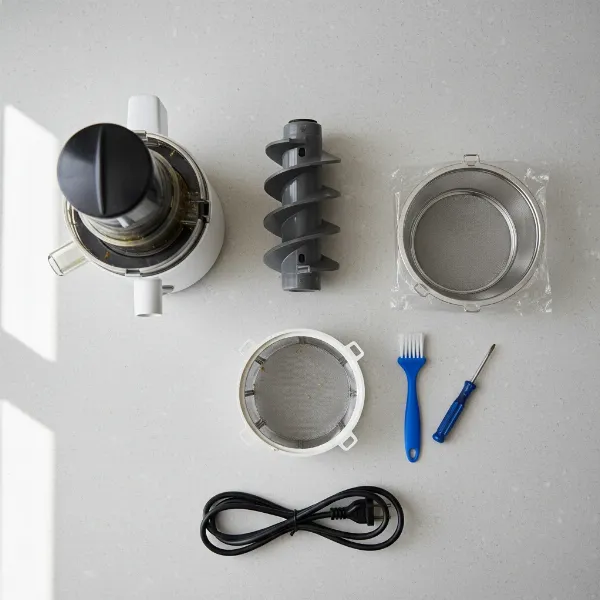 Essential tools and a disassembled juicer laid out for screen replacement.
Step-by-Step Guide to Replacing Your Juicer Screen
While specific steps may vary slightly by juicer model, the general procedure for replacing a worn-out screen follows a common pattern. Always refer to your juicer’s instruction manual for precise disassembly and reassembly guidance.
- Unplug the Juicer: Ensure the appliance is completely disconnected from the power source.
- Disassemble the Top Section: Unlock any fastening levers or clasps. Carefully remove the food pusher, top cover, and feeding chute.
- Remove Existing Components:
- For Centrifugal Juicers: The screen is typically part of a mesh filter basket. Give the base a slight twist, and the entire basket assembly should lift out [cite: 1, 2 (search 1)].
- For Masticating (Slow) Juicers: First, remove the auger (the screw-like component). Then, the juicing screen/strainer can be lifted out of the juicing chamber. Some vertical models may also have a spinning brush that comes out before the screen.
- Inspect and Clean: Take this opportunity to thoroughly clean all other removable components, such as the pulp container, juice collector, and juicing chamber. Ensure no old pulp or residue remains before installing the new screen.
- Install the New Juicer Screen:
- Carefully place the new screen into its designated position within the juicing chamber.
- Many screens have alignment marks, such as arrows or notches, that need to match up with corresponding marks on the juicer’s base or other components. Align these precisely to ensure a secure fit and proper operation [cite: 1, 2 (search 1)].
- Gently press the screen into place until it sits firmly and correctly. Do not force it.
- Reassemble the Juicer: Reattach the remaining components in reverse order of disassembly. This usually means replacing the auger (for masticating juicers), followed by the juicing chamber, pulp container, juice collector, top cover, and finally securing the locking bar or clasps. Ensure all parts fit snugly and are properly aligned and locked.
- Test Run: Before juicing produce, plug in your juicer and run it briefly (if your model allows for an empty run) to ensure everything sounds and feels correct.
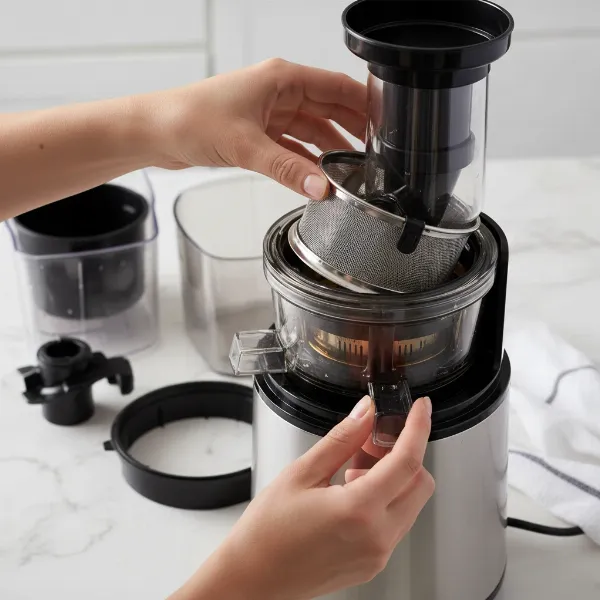 A person carefully installing a new juicer screen into a juicer base.
Finding the Right Replacement Juicer Screen
Locating the correct replacement screen is paramount for optimal performance and safety. An ill-fitting screen can damage your juicer or compromise juice quality.
- Start with the Manufacturer: The most reliable place to find genuine OEM (Original Equipment Manufacturer) parts is directly from your juicer’s brand website. Brands like Omega offer specific replacement parts for their various models [cite: 2 (search 4)]. This ensures perfect compatibility and quality.
- Authorized Parts Retailers: Many reputable online stores specialize in appliance replacement parts. Websites such as eReplacementParts.com, PartSelect.com, and Fix.com are excellent resources [cite: 2, 3 (search 1)]. These sites often have detailed diagrams and compatibility checkers.
- General Online Marketplaces: Retailers like Walmart and eBay also carry a wide range of replacement screens, but exercise caution [cite: 1, 3 (search 4)]. Always double-check the product description for specific brand and model number compatibility, and verify seller reputation.
- Crucial Identification: Always use your juicer’s brand and exact model number when searching for parts. Some older models might even require a serial number to ensure the correct fit [cite: 5 (search 4)]. A quick search for “Breville juicer screen replacement” or “Omega juicer screen for model X” will yield more targeted results.
- Consider OEM vs. Generic: While generic parts can sometimes be cheaper, OEM parts are designed and tested specifically for your machine, often offering better durability and a precise fit.
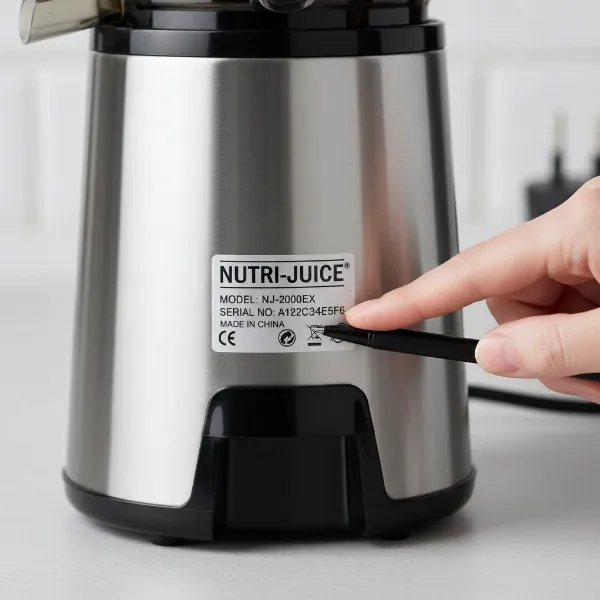 Close-up of a juicer's label showing brand and model number for parts.
Extending the Life of Your Juicer Screen
Proper care and maintenance can significantly prolong the life of your juicer screen, delaying the need for replacement and ensuring consistent performance.
- Clean Immediately After Use: The golden rule of juicer maintenance is to clean the screen as soon as you finish juicing. Dried pulp and juice residue are much harder to remove and can clog the fine mesh holes, leading to pressure buildup and potential cracks [cite: 2 (search 2), 5 (search 2), 2 (search 5)]. If you can’t clean it right away, soak the disassembled parts in warm water.
- Utilize a Cleaning Brush: Most juicers come with a specialized brush designed to clean the fine mesh of the screen. Use this tool diligently to scrub out any trapped pulp from all the tiny holes [cite: 5 (search 2), 3 (search 5)].
- Soak for Stubborn Clogs: For screens with dried-on pulp or mineral deposits, soak them in warm, soapy water for a few hours. A solution of warm water mixed with a splash of white vinegar or citric acid can also effectively loosen stubborn residue [cite: 2 (search 5)].
- Inspect Against Light: After cleaning, hold your screen up to a strong light source. This simple trick allows you to easily identify any remaining clogged holes, ensuring a truly clean screen for your next use [cite: 1, 2 (search 5)].
- Thorough Drying: After washing, physically dry your juicer screen with a towel. Air drying, especially in areas with hard water, can leave mineral deposits in the sieve holes [cite: 2 (search 5)].
- Proper Loading Techniques: Avoid overfeeding your juicer or rushing the process. Cut fruits and vegetables into appropriate sizes that fit easily into the feeding chute without forcing them. This reduces strain on the screen and other components [cite: 4 (search 5)].
- Avoid Extreme Temperatures: Never wash juicer parts, especially screens, in boiling hot water or dry them in an oven. High temperatures can cause plastic components to warp or deform, affecting the screen’s fit and the juicer’s overall function [cite: 3 (search 5)].
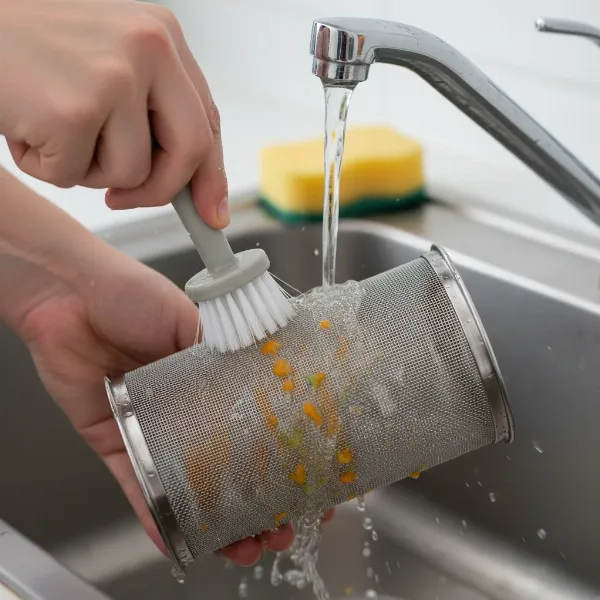 Hand using a small brush to clean the fine mesh of a juicer screen.
Buying Guide (Replacement Juicer Screen)
When it’s time to purchase a new juicer screen, a systematic approach ensures you get the right part without hassle.
- Identify Your Juicer’s Brand and Model: This is non-negotiable. The screen must be an exact match for your specific juicer model. Check the appliance’s base or user manual for this information.
- Determine the Screen Type: While most replacements are standard, some juicers offer different screen options (e.g., fine mesh for smoother juice, coarse screen for more pulp). Choose the one that best suits your juicing preferences.
- Choose Your Vendor: Prioritize the original manufacturer’s website or authorized parts retailers for genuine parts. These sources generally offer reliable products and customer support. For cost-conscious buyers, large online marketplaces are an option, but scrutinize seller reviews and return policies carefully.
- Read Product Reviews: Before finalizing your purchase, look for reviews specific to the replacement screen, not just the juicer itself. This can offer insights into the quality and longevity of the part.
- Check Warranty and Return Policies: Understand the warranty offered on the replacement part and the vendor’s return policy in case of an incorrect fit or defect.
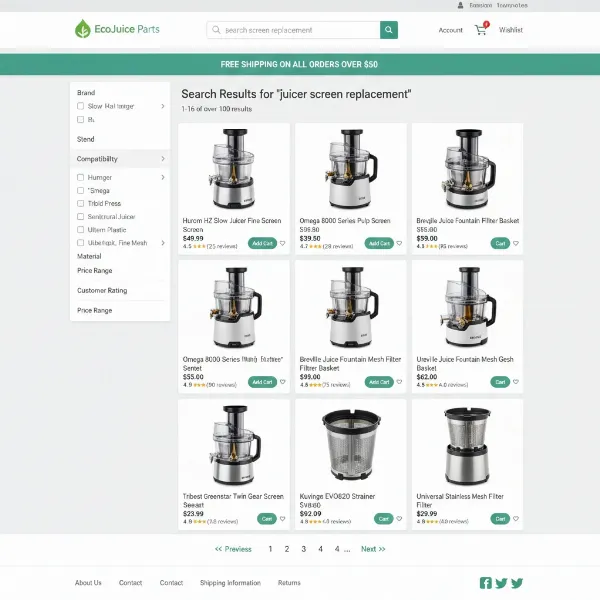 Online shopping interface showing different juicer screen replacement options.
Frequently Asked Questions
How often should I replace my juicer screen?
|
Our Picks for the Best Juicer in 2026
As an Amazon Associate I earn from qualifying purchases.
|
||
| Num | Product | Action |
|---|---|---|
| 1 | Magic Bullet Mini Juicer with Cup, Black and Silver |

|
| 2 | Juicer Machines with 5.8" Large Feed Chute, Cold Press Juicer for Whole Vegetables and Fruits 400W, Slow Masticating juicer Easy to Clean Juice Extractor Machine High Juice Yield |
|
| 3 | Ninja NeverClog Cold Press Juicer, Powerful Slow Juicer with Total Pulp Control, Countertop, Electric, 2 Pulp Functions, Dishwasher Safe, 2nd Generation, Charcoal, JC151 |
|
| 4 | Qcen Juicer Machine, 500W Centrifugal Juicer Extractor with Wide Mouth 3” Feed Chute for Fruit Vegetable, Easy to Clean, Stainless Steel, BPA-free (Black) |
|
| 5 | Zulay Kitchen Cast Iron Juicer - Easy-to-Clean Heavy-Duty Manual Juicer, Professional Citrus Juicer - Stainless Steel Lemon Squeezer - Manual Citrus Press & Orange Squeezer - Orange Juicer (Black) |
|
| 6 | BLACK+DECKER 32oz Electric Citrus Juicer, CJ625, Pressure Activated, Adjustable Pulp Control, Dishwasher-Safe |
|
| 7 | Qcen Juicer Machine, 800W Centrifugal Juicer Extractor with Wide Mouth 3” Feed Chute for Fruit Vegetable, Easy to Clean, Stainless Steel, BPA-free (Black) |
|
| 8 | Juicer Machines, Juilist 3" Wide Mouth Juicer Extractor Max Power 800W, for Vegetable and Fruit with 3-Speed Setting, 400W Motor, Easy to Clean |
|
| 9 | Cold Press Juicer, Juicer Machines with 5.4" Wide Feed Chute for Juice Extractor, Professional Slow Masticating Juicer for Whole Vegetables & Fruits with High Juice Yield, Easy to Clean (Black) |
|
| 10 | juicer machines with 5.8" Large Feed Chute, Slow masticating cold press juicer for Whole Fruits & Vegetables, easy to clean Design, High Juice Yield Home juicer for Daily Wellness |
|
There’s no universal timeline for replacing a juicer screen, as it depends heavily on usage frequency, types of produce juiced, and cleaning habits. Instead of a fixed schedule, monitor for signs of wear like excessive pulp, reduced yield, or visible cracks, which typically appear after months to a few years of regular use.
Can a damaged juicer screen affect the taste of my juice?
Yes, absolutely. A damaged or poorly functioning screen can allow unwanted pulp or even fine debris to pass into your juice, altering its texture and potentially its taste. Furthermore, persistent residue in clogged screens can harbor bacteria and mold, leading to off-flavors and potential health risks if consumed [cite: 5 (search 2)].
Is it difficult to replace a juicer screen myself?
For most popular juicer models, replacing the screen is a straightforward process that doesn’t require specialized tools or extensive technical skills. It typically involves disassembling a few top components, removing the old screen, inserting the new one, and reassembling. Always refer to your juicer’s manual for model-specific instructions.
My juicer is old, can I still find replacement screens?
For older juicer models, finding original OEM replacement parts might be challenging. However, many authorized parts retailers and online marketplaces still stock parts for popular older models. If an exact match is unavailable, you might need to consider third-party compatible parts or evaluate if it’s time to invest in a new juicer.
Can a clogged screen damage my juicer’s motor?
Yes, a severely clogged screen forces your juicer’s motor to work harder to push ingredients through, leading to overheating and premature motor wear. This added strain can significantly shorten the lifespan of your juicer’s motor and potentially lead to costly repairs or a complete breakdown [cite: 3 (search 5)].
 Healthy, fresh juice in a glass, symbolizing the benefits of a well-maintained juicer.
Conclusion
A well-maintained juicer screen is fundamental to the optimal performance of your appliance and the quality of your fresh juices. By understanding the signs of wear, confidently following the steps to replace a worn-out screen, and committing to proper care routines, you can ensure your juicer remains a reliable partner in your wellness journey. Don’t let a compromised screen diminish the joy and health benefits of fresh juicing; empower yourself with the knowledge to maintain your machine. What difference has a new juicer screen made to your daily juicing routine?