Embarking on a journey to incorporate wheatgrass into your daily routine is a brilliant step towards enhanced well-being. This vibrant green superfood, packed with chlorophyll, vitamins, minerals, and amino acids, offers a potent nutritional boost that many seek for detoxification, energy, and overall vitality. However, transforming these fibrous blades into a potent juice requires more than just any juicer. You need the right machine and a refined technique to unlock its full potential. This comprehensive guide, informed by years of juicing experience, will walk you through everything you need to know, from selecting the ideal juicer to mastering the art of wheatgrass juicing, ensuring you get the most out of every healthful drop.
Understanding Wheatgrass Juicing: Why Specialized Machines Matter
Wheatgrass is unique due to its highly fibrous structure, which poses a significant challenge for conventional juicers. Unlike softer fruits and vegetables, wheatgrass blades don’t easily break down or release their liquid content efficiently under typical juicing mechanisms. This is why specialized equipment is crucial.
Centrifugal juicers, for instance, are generally unsuitable for wheatgrass. Their high-speed spinning blades generate heat and introduce air, which can rapidly oxidize and degrade the delicate enzymes and nutrients in the wheatgrass juice. Moreover, their design often results in a very low yield from fibrous greens, leaving much of the valuable juice still locked within the pulp. For true wheatgrass enthusiasts, these machines simply won’t deliver the quality or quantity desired.
In contrast, masticating, or slow juicers, are specifically engineered to handle the fibrous nature of wheatgrass. These cold press juicers work by slowly crushing and pressing the grass, minimizing heat buildup and oxidation. This gentle extraction method not only yields significantly more juice but also ensures that the vital enzymes and nutrients remain intact, delivering a more potent and beneficial shot. Dedicated manual wheatgrass juicers also excel at this task, offering an affordable and effective way to extract pure wheatgrass juice with minimal heat.
Types of Juicers for Wheatgrass: Finding Your Perfect Match
Choosing the right juicer is paramount for an optimal wheatgrass experience. Understanding the differences between types will help you select a machine that aligns with your juicing frequency, budget, and desired juice quality.
Masticating (Slow) Juicers
Masticating juicers are the gold standard for wheatgrass and other leafy greens. They operate at low speeds (typically 60-100 RPM), slowly grinding and pressing produce to extract juice. This “cold press” method preserves heat-sensitive nutrients and enzymes, producing a richer, more vibrant juice with less foam and longer shelf life.
- Single-Gear Masticating Juicers: These versatile machines feature a single auger that crushes and squeezes the wheatgrass against a screen. They are excellent for leafy greens, fruits, and vegetables, making them a great all-rounder for varied juicing needs. Popular models like the Omega NC900HDC are highly praised for their efficiency, quiet operation, and ability to handle fibrous ingredients like wheatgrass with ease, often offering additional functions like making nut butters or sorbets. The Omega J8006 is another well-regarded option, known for its strong performance and durability, providing great value for its price.
- Twin-Gear (Triturating) Juicers: Considered the pinnacle of juicing technology, twin-gear juicers feature two interlocking gears that spin very close together, pulverizing produce to an incredibly fine degree. This results in the highest possible juice yield and exceptional nutrient extraction. Machines like the Tribest Greenstar Elite GSE-5000 and the Angel Juicer AG-7500 are prime examples, offering unparalleled efficiency for wheatgrass, though they typically come at a higher investment. Their robust stainless steel construction ensures durability and optimal performance.
|
Our Picks for the Best Juicer in 2026
As an Amazon Associate I earn from qualifying purchases.
|
||
| Num | Product | Action |
|---|---|---|
| 1 | Magic Bullet Mini Juicer with Cup, Black and Silver |

|
| 2 | Juicer Machines, Juilist 3" Wide Mouth Juicer Extractor Max Power 800W, for Vegetable and Fruit with 3-Speed Setting, 400W Motor, Easy to Clean |
|
| 3 | Juicer Machines with 5.8" Large Feed Chute, Cold Press Juicer for Whole Vegetables and Fruits 400W, Slow Masticating juicer Easy to Clean Juice Extractor Machine High Juice Yield |
|
| 4 | Zulay Kitchen Cast Iron Juicer - Easy-to-Clean Heavy-Duty Manual Juicer, Professional Citrus Juicer - Stainless Steel Lemon Squeezer - Manual Citrus Press & Orange Squeezer - Orange Juicer (Black) |
|
| 5 | Qcen Juicer Machine, 500W Centrifugal Juicer Extractor with Wide Mouth 3” Feed Chute for Fruit Vegetable, Easy to Clean, Stainless Steel, BPA-free (Black) |
|
| 6 | Cold Press Juicer, Juicer Machines with 5.4" Wide Feed Chute for Juice Extractor, Professional Slow Masticating Juicer for Whole Vegetables & Fruits with High Juice Yield, Easy to Clean (Black) |
|
| 7 | juicer machines with 5.8" Large Feed Chute, Slow masticating cold press juicer for Whole Fruits & Vegetables, easy to clean Design, High Juice Yield Home juicer for Daily Wellness |
|
| 8 | Qcen Juicer Machine, 800W Centrifugal Juicer Extractor with Wide Mouth 3” Feed Chute for Fruit Vegetable, Easy to Clean, Stainless Steel, BPA-free (Black) |
|
| 9 | Ninja NeverClog Cold Press Juicer, Powerful Slow Juicer with Total Pulp Control, Countertop, Electric, 2 Pulp Functions, Dishwasher Safe, 2nd Generation, Charcoal, JC151 |
|
| 10 | BLACK+DECKER 32oz Electric Citrus Juicer, CJ625, Pressure Activated, Adjustable Pulp Control, Dishwasher-Safe |
|
Manual Wheatgrass Juicers
For those on a budget, short on space, or seeking a truly portable option, manual wheatgrass juicers are an excellent choice. These hand-cranked machines are specifically designed to press the juice from wheatgrass efficiently.
Manual juicers offer benefits such as being remarkably affordable, highly portable, and requiring no electricity. They operate at the slowest possible speed, which inherently prevents heat and oxidation, ensuring maximum nutrient preservation. Models like the Lexen Healthy Juicer GP27 and the Hurricane Stainless Steel Manual Wheatgrass Juicer are well-known for their effectiveness and simple, durable designs. While they require some manual effort, they are exceptionally effective for dedicated wheatgrass juicing and are generally very easy to clean.
Blender Method: An Alternative (with Caveats)
If a specialized juicer isn’t immediately available, a high-powered blender can be used as a temporary alternative for juicing wheatgrass. However, it’s important to understand the compromises involved.
To use a blender, you’ll need to combine chopped wheatgrass with a small amount of water to help the blades process it. Blend until the grass is completely liquefied, then strain the mixture through a fine-mesh strainer or cheesecloth to separate the juice from the pulp. While this method can produce a drinkable result, it significantly dilutes the wheatgrass juice with water, potentially reducing its potency and nutrient concentration compared to a true cold-pressed juice. It’s also often messier and may leave more fibrous material behind, making it a less ideal long-term solution.
Essential Techniques for Juicing Wheatgrass
Once you have your preferred juicer, mastering the technique is the next step to enjoying fresh, potent wheatgrass juice. Proper preparation and juicing methods make all the difference.
Preparation: From Harvest to Juicer
Starting with fresh, well-prepared wheatgrass is crucial for the best results.
- Harvesting: For optimal juice quality, harvest wheatgrass when it reaches 4-6 inches in height. Cut the grass just above the root level; this allows for a second growth, giving you more yield from a single planting.
- Washing Thoroughly: Rinse your harvested wheatgrass under cold water to remove any dirt or debris. Some prefer to sprinkle a pinch of sea salt on the grass before rinsing for an extra clean.
- Chopping: While many masticating juicers can handle longer blades, roughly chopping your wheatgrass into smaller pieces (around 1-2 inches) can make the feeding process smoother and prevent tangling, especially for certain juicer models or when using a blender.
- Portioning: For single shots, approximately ¼ cup of prepared wheatgrass per serving is a good starting point. Adjust based on your preference for intensity and the yield of your specific machine.
Juicing Process: Maximizing Your Yield
The actual juicing technique varies slightly depending on your machine type.
- Using a Masticating Juicer: Feed the prepared wheatgrass slowly into the juicer’s chute. Avoid overloading the machine. For horizontal masticating juicers, it can be helpful to feed a small, firm vegetable like a carrot chunk or a piece of celery every few handfuls of wheatgrass. This acts as a “pusher,” helping to clear the auger and extract maximum juice. If using a twin-gear juicer, you might notice even drier pulp, indicating superior extraction.
- Using a Manual Juicer: Manual juicers require you to hand-crank as you feed the wheatgrass. Feed small amounts at a time, turning the crank steadily. Many manual models allow you to re-process the pulp a second time by feeding it back into the chute to extract any remaining juice.
- Using a Blender (Alternative): Combine your chopped wheatgrass with a minimal amount of filtered water (start with just enough to cover the blades, typically 1/2 to 1 cup per 1/4 cup of wheatgrass) in a high-speed blender. Blend on the highest setting for about 60 seconds until a smooth, green liquid is formed. Then, pour the mixture through a fine-mesh strainer or cheesecloth-lined bowl, pressing down on the pulp with a spatula to extract all the liquid. Discard the fibrous pulp.
Consumption Tips: Getting the Most Out of Your Juice
Wheatgrass juice is potent, and how you consume it can impact your experience and its benefits.
- Drink Immediately: Wheatgrass juice is a “living food,” meaning its enzymes and nutrients are most active immediately after juicing. For maximum benefit and flavor, consume your juice within 15-30 minutes of preparation to prevent oxidation and nutrient loss.
- Start Small: If you’re new to wheatgrass, its intense, grassy flavor can be overwhelming, and it can sometimes cause nausea. Begin with a small shot (e.g., 30ml or 1 ounce) and gradually increase the amount as your body adjusts.
- Improve Palatability: To make wheatgrass juice more enjoyable, especially for beginners, consider mixing it with other fresh juices. Apple, orange, pineapple, or cucumber juice can help mask the strong taste without diluting its core benefits. A squeeze of lemon can also add a refreshing zing.
- Best Time to Drink: Many experts recommend drinking wheatgrass juice on an empty stomach in the morning. This allows for optimal absorption of its nutrients. Wait about an hour before consuming other food or drinks.
Key Criteria for Choosing the Best Wheatgrass Juicer
With several options available, considering these factors will guide you to the ideal wheatgrass juicer for your home.
Extraction Method
As discussed, a masticating (slow) juicer is highly recommended for wheatgrass due to its gentle, cold-press extraction. This method minimizes heat and oxidation, preserving the maximum amount of nutrients and enzymes, which are particularly abundant and delicate in wheatgrass. Centrifugal juicers, with their high-speed operation, are generally inefficient and can degrade the juice’s quality.
Motor Power and Speed (RPM)
For electric masticating juicers, look for models operating around 60-80 RPM. This slow speed is critical for preventing heat buildup and oxidation. A powerful motor ensures the juicer can handle fibrous wheatgrass without stalling or clogging, delivering consistent performance and high juice yield.
Material Quality
Durability and safety are key. Opt for juicers made with BPA-free plastics, Tritan, or stainless steel parts. These materials ensure your juice remains free from harmful chemicals and that your investment will last for years, even with frequent use. Stainless steel models, while often pricier, offer exceptional longevity and hygiene.
Ease of Cleaning
Frequent juicing means frequent cleaning. Choose a model with easily detachable parts that are simple to rinse and brush. Many modern masticating juicers have fewer complex components compared to older models, making cleanup a breeze. While manual juicers require more elbow grease during operation, their simpler design often translates to quicker cleaning.
Versatility
Consider whether you’ll be juicing only wheatgrass or a variety of produce. Many high-quality masticating juicers, like the Omega NC900HDC, are multi-functional, excelling with wheatgrass, leafy greens, hard root vegetables, and even fruits, and can often be used for making nut milks, sorbets, or grinding coffee. If wheatgrass is your sole focus, a dedicated manual juicer might suffice.
Size and Portability
Evaluate your kitchen space. If you have limited countertop area, a compact electric masticating juicer or a manual juicer might be more suitable. For those who travel frequently or want to juice on the go, a manual wheatgrass juicer offers unmatched portability.
Budget
Wheatgrass juicers range in price from very affordable manual models to high-end electric twin-gear machines. Determine your budget and balance it with the features and performance you need. An initial investment in a quality masticating juicer can pay off in the long run through higher juice yield and nutrient retention.
Top Wheatgrass Juicers: A Comparative Glance
Based on expert reviews and user satisfaction, here are some of the best machines for juicing wheatgrass:
- Omega NC900HDC Juicer: Often hailed as an “overall best” choice, this premium masticating juicer operates at a slow 80 RPM, effectively preserving nutrients. Its versatile design handles wheatgrass, leafy greens, fruits, vegetables, and even acts as a nutrition system for making nut butters. It’s also praised for its ease of assembly and cleaning.
- Tribest Greenstar Elite GSE-5000: This powerful twin-gear masticating juicer is known for its exceptional yield and ability to preserve enzymes due to its bio-ceramic, magnetic twin gears. It’s a multi-functional tool suitable for dedicated health enthusiasts, though it represents a higher investment.
- Angel Juicer AG-7500: Considered by many as the “best wheatgrass juicer on the market,” the Angel Juicer is made entirely from food-grade stainless steel. Its twin-gear technology operates at 82 RPM with significant grinding force, thoroughly breaking down plant fibers for exceptionally smooth, nutrient-rich juice.
- FRETTA Slow Masticating Juicer: Offering great value, this juicer features a wide 3-inch feeding chute for less chopping and operates at a gentle 80 RPM. Crafted from BPA-free Tritan, it focuses on maximizing extraction and flavor while minimizing foam.
- Jocuu Slow Masticating Juicer: An excellent option for beginners, this juicer offers two speed modes and runs quietly at 60–80 RPM. Its compact design and easy cleaning make it user-friendly, providing efficient juicing without a high price tag.
- ORIGINAL Healthy Juicer (Manual): This manual juicer is specifically designed for wheatgrass and leafy greens. It uses advanced masticating technology to retain live enzymes and is made from BPA-free, non-toxic materials with a durable stainless steel tip. It’s an affordable and easy-to-clean option for dedicated manual juicing.
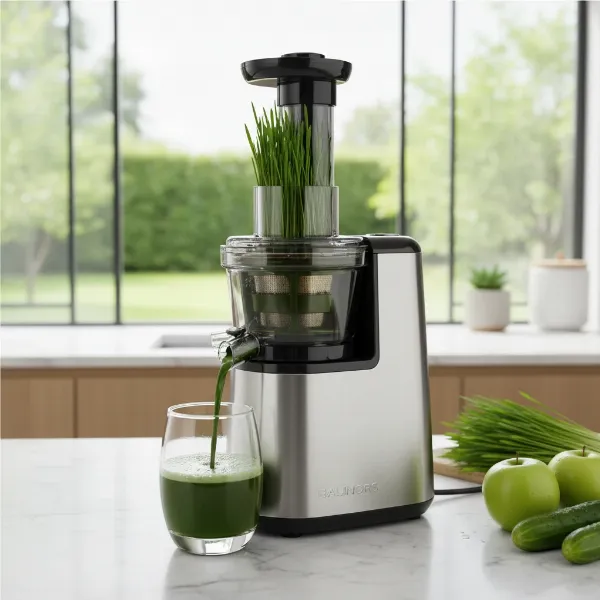 A sleek, modern masticating juicer extracting vibrant green wheatgrass juice into a glass.
The Remarkable Health Benefits of Wheatgrass Juice
Wheatgrass juice is often celebrated as a powerhouse of nutrition, and for good reason. Its impressive profile contributes to various potential health benefits, making it a valuable addition to many diets.
Wheatgrass is a true superfood, brimming with vital nutrients including iron, calcium, magnesium, a full spectrum of phytonutrients, 17 amino acids, and vitamins A, C, E, K, and B complex. A significant component is chlorophyll, which gives wheatgrass its distinctive green color and is believed to have remarkable health-promoting properties.
Among its many benefits, wheatgrass is thought to aid in detoxification, helping the body eliminate impurities and stored toxins, largely due to its chlorophyll content. It also supports digestive health through its essential and nonessential amino acids, which help produce high-quality proteins that facilitate digestion. The anti-inflammatory and antioxidant properties of wheatgrass may further alleviate various digestive issues.
Consuming wheatgrass juice can also boost your immune system thanks to its rich array of vitamins and antioxidants. For those feeling sluggish, its carbohydrates, proteins, and other nutrients can provide a natural energy enhancement. Research suggests potential roles for wheatgrass in lowering cholesterol levels and aiding in the management of type 2 diabetes by protecting against oxidative stress. Furthermore, its anti-inflammatory properties, attributed to flavonoids and chlorophyll, may help reduce inflammation, potentially easing symptoms of conditions like arthritis. Preliminary studies even indicate potential anti-cancer properties, though more extensive research is needed to fully confirm these effects.
It’s worth noting that while wheatgrass is a natural supplement, it can cause side effects like nausea, especially for beginners due to its potent taste. Always consult a healthcare professional, especially if you are pregnant, nursing, have allergies, a gluten intolerance, or are on medication.
Where to Buy Your Wheatgrass Juicer
Finding a reliable vendor for your wheatgrass juicer is just as important as choosing the right model. When making your purchase, consider both convenience and the assurance of support.
Online retailers such as Amazon are popular choices, offering a wide selection of brands and models, competitive pricing, and often free shipping. Reputable brand websites (e.g., Omega, Tribest, Angel Juicer) also provide direct purchasing options, which can sometimes include exclusive deals or extended warranties. These platforms are excellent for comparing specifications and reading customer reviews.
For a more hands-on experience and expert advice, consider visiting specialty health food stores or kitchen appliance retailers. While their selection might be narrower, you can often see and touch the machines, and knowledgeable staff can answer your questions directly.
Regardless of where you purchase, always inquire about warranty policies and customer service. A good warranty provides peace of mind, and accessible customer support can be invaluable if you encounter any issues with your juicer or have questions about its operation. Ensure the retailer or manufacturer offers clear return and exchange policies.
Buying Guide: Your Path to Fresh Wheatgrass Juice
Making the decision to incorporate fresh wheatgrass juice into your lifestyle is a commitment to health. To ensure you choose the best machine for your needs, follow this simple buying guide:
-
Define Your Needs:
- What will you juice? If it’s solely wheatgrass, a dedicated manual juicer is cost-effective. If you plan to juice a variety of fruits and vegetables, a versatile electric masticating juicer is a better investment.
- How often will you juice? Daily juicers might prioritize ease of cleaning and motor power, while occasional juicers might favor portability or a lower price point.
- What’s your space like? Consider the physical footprint of the juicer on your countertop and storage options.
-
Set Your Budget: Wheatgrass juicers range from under $100 for basic manual models to $500+ for high-end twin-gear electric machines. Establish what you’re willing to spend to narrow down your choices.
-
Compare Based on Criteria:
- Extraction Method: Prioritize masticating/cold press for wheatgrass.
- Speed (RPM): For electric, aim for low RPM (60-80) to protect nutrients.
- Material: Look for BPA-free components or stainless steel for health and durability.
- Cleaning: Factor in how easy it is to disassemble and clean the parts.
- Versatility: Decide if you need an all-rounder or a dedicated wheatgrass machine.
-
Read User Reviews: Customer feedback can offer valuable insights into a juicer’s real-world performance, durability, and any potential quirks not highlighted in product descriptions. Pay attention to comments specifically regarding wheatgrass juicing.
-
Check Warranty and Support: A strong warranty and responsive customer service are indicators of a manufacturer’s confidence in their product and commitment to their customers.
By thoughtfully evaluating these points, you can confidently select a wheatgrass juicer that will serve you well for years, helping you easily enjoy the profound health benefits of this incredible green juice.
Conclusion
Embracing fresh wheatgrass juice is a transformative step toward a more vibrant and healthful life. As we’ve explored, the key to unlocking this superfood’s full potential lies in selecting the right juicer and employing effective techniques. Masticating juicers, whether electric or manual, stand out as the superior choice, meticulously pressing the fibrous blades to preserve precious enzymes and deliver a potent, nutrient-dense elixir. By understanding the distinct advantages of each machine type, from the versatile Omega to the robust Angel Juicer, and by applying proper preparation and consumption methods, you are well-equipped to integrate this green powerhouse into your daily regimen.
Remember, the goal is not just to make juice, but to extract liquid vitality in its purest form, maximizing the detoxification, energy-boosting, and immune-enhancing benefits wheatgrass offers. With the insights shared here, you are empowered to make an informed decision, selecting a machine that fits your lifestyle and supports your wellness journey. So, are you ready to elevate your health with the remarkable power of freshly juiced wheatgrass?
Frequently Asked Questions
Why can’t I use a centrifugal juicer for wheatgrass?
Centrifugal juicers operate at high speeds, using blades that generate heat and introduce air, which rapidly oxidizes and destroys the delicate enzymes and nutrients in wheatgrass. Their design is also inefficient for fibrous greens, resulting in a very low juice yield and wasted produce.
How much wheatgrass juice should a beginner drink?
It’s recommended for beginners to start with a small shot, typically around 1 ounce (30ml), once a day on an empty stomach. This allows your body to adjust to its potent effects. You can gradually increase the amount as you become accustomed to it.
What are the main benefits of drinking wheatgrass juice?
Wheatgrass juice is a nutritional powerhouse, rich in chlorophyll, vitamins, minerals, and amino acids. It is known to aid detoxification, support digestion, boost the immune system, enhance energy levels, and may help lower cholesterol and reduce inflammation.
How can I make wheatgrass juice taste better?
To mitigate wheatgrass’s strong, grassy flavor, especially for newcomers, you can mix it with other fresh juices. Popular choices include apple, orange, pineapple, or cucumber juice. Adding a squeeze of lemon or lime can also significantly improve its palatability.
Is it okay to prepare wheatgrass juice in advance?
While wheatgrass juice can be stored in an airtight container in the refrigerator for a short period (up to 24 hours), it is most beneficial when consumed immediately after juicing. Its living enzymes and nutrients begin to degrade quickly upon exposure to air and light, so fresh is always best for maximum potency.