The vibrant taste and myriad health benefits of fresh juice are undeniable. There’s a distinct pleasure in sipping a homemade concoction, knowing it’s packed with natural goodness. However, for many juice enthusiasts, the presence of pulp can detract from the experience, altering the texture and sometimes even the flavor. Whether you prefer a silky-smooth drink for everyday enjoyment or a crystal-clear base for culinary creations, achieving that perfectly refined texture is simpler than you might think. As an expert in juicing technologies, I’m here to guide you through effective methods and essential tools to transform your pulpy pour into a pristine, smooth sip every time.
Why Filter Your Juice? Enhancing Taste and Texture
Filtering juice goes beyond mere aesthetic preference; it significantly enhances the overall drinking experience. While some appreciate a little pulp for added fiber, a smoother texture can make juice more palatable, especially for children or those new to juicing. Removing excess solids ensures a consistent, refined mouthfeel that truly lets the pure flavors of the fruits and vegetables shine through.
Moreover, clarifying juice by removing fine particles can have practical benefits, particularly for certain applications. For instance, in mixology, clarified juices offer a cleaner, brighter flavor profile and can even extend the shelf life of your juice for a couple of days longer than fresh, unfiltered juice, making them ideal for crafting elegant cocktails. Fine filtration helps prevent oxidation caused by suspended solids, contributing to a more stable and visually appealing beverage.
Essential Tools for Filtering Juice
Achieving a perfectly smooth juice texture relies on employing the right tools. Each filtering device offers a different level of filtration, speed, and reusability, allowing you to choose the best option based on your needs and the type of juice you’re making.
Fine-Mesh Strainers and Sieves
Fine-mesh strainers are fundamental kitchen tools, excellent for basic pulp removal. They feature a metal mesh screen with small perforations, designed to catch larger pieces of pulp and fibers while allowing liquid to pass through.
- How to Use: Simply place the strainer over a bowl or pitcher and pour your freshly juiced liquid through it. You can gently stir the juice in the strainer to encourage flow.
- Pros: Readily available, affordable, easy to clean, good for a first pass or moderately pulpy juices.
- Cons: May not remove very fine particles, potentially requiring multiple passes for optimal smoothness.
|
Our Picks for the Best Juicer in 2026
As an Amazon Associate I earn from qualifying purchases.
|
||
| Num | Product | Action |
|---|---|---|
| 1 | Juicer Machines, Juilist 3" Wide Mouth Juicer Extractor Max Power 800W, for Vegetable and Fruit with 3-Speed Setting, 400W Motor, Easy to Clean |

|
| 2 | Magic Bullet Mini Juicer with Cup, Black and Silver |
|
| 3 | Qcen Juicer Machine, 800W Centrifugal Juicer Extractor with Wide Mouth 3” Feed Chute for Fruit Vegetable, Easy to Clean, Stainless Steel, BPA-free (Black) |
|
| 4 | Qcen Juicer Machine, 500W Centrifugal Juicer Extractor with Wide Mouth 3” Feed Chute for Fruit Vegetable, Easy to Clean, Stainless Steel, BPA-free (Black) |
|
| 5 | Zulay Kitchen Cast Iron Juicer - Easy-to-Clean Heavy-Duty Manual Juicer, Professional Citrus Juicer - Stainless Steel Lemon Squeezer - Manual Citrus Press & Orange Squeezer - Orange Juicer (Black) |
|
| 6 | juicer machines with 5.8" Large Feed Chute, Slow masticating cold press juicer for Whole Fruits & Vegetables, easy to clean Design, High Juice Yield Home juicer for Daily Wellness |
|
| 7 | Juicer Machines with 5.8" Large Feed Chute, Cold Press Juicer for Whole Vegetables and Fruits 400W, Slow Masticating juicer Easy to Clean Juice Extractor Machine High Juice Yield |
|
| 8 | Ninja NeverClog Cold Press Juicer, Powerful Slow Juicer with Total Pulp Control, Countertop, Electric, 2 Pulp Functions, Dishwasher Safe, 2nd Generation, Charcoal, JC151 |
|
| 9 | BLACK+DECKER 32oz Electric Citrus Juicer, CJ625, Pressure Activated, Adjustable Pulp Control, Dishwasher-Safe |
|
| 10 | Cold Press Juicer, Juicer Machines with 5.4" Wide Feed Chute for Juice Extractor, Professional Slow Masticating Juicer for Whole Vegetables & Fruits with High Juice Yield, Easy to Clean (Black) |
|
Cheesecloth
Cheesecloth is a versatile, loosely woven cotton fabric often used in cooking and straining. Its unique weave makes it highly effective for separating solids from liquids.
- How to Use: Line a fine-mesh strainer or stretch the cheesecloth over the rim of a pitcher, securing it with a rubber band. Pour the juice into the cheesecloth. For maximum pulp removal and juice extraction, gather the edges of the cheesecloth to form a pouch and gently squeeze the liquid out.
- Pros: Very effective for fine filtration, adaptable to various container sizes, allows for squeezing to extract more liquid.
- Cons: Can be messy, often single-use (though some can be washed and reused), requires careful handling to avoid tearing.
Nut Milk Bags
Nut milk bags are durable, reusable filtering bags, typically made from nylon or hemp, with an ultra-fine mesh. While designed for making nut milks, they are incredibly effective for filtering fruit and vegetable juices.
- How to Use: Similar to cheesecloth, place the nut milk bag over a large bowl or pitcher. Pour your juice into the bag, then gather the opening and gently squeeze the bag to force the juice through the fine mesh.
- Pros: Extremely fine filtration, highly durable and reusable, easy to clean, efficient for extracting maximum liquid from pulp, less messy than cheesecloth.
- Cons: Requires manual squeezing, which can be tiring for large batches.
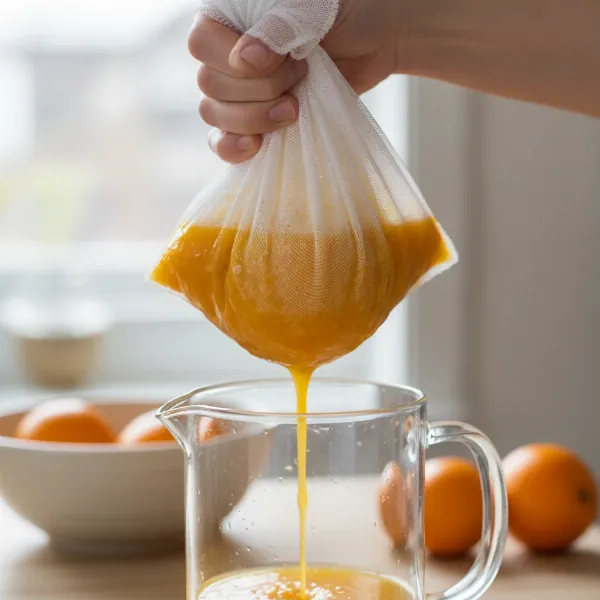 A hand squeezing a nut milk bag filled with fresh fruit juice into a glass pitcher, illustrating how to filter juice for a smoother texture.
Coffee Filters (Paper & Metal)
Coffee filters, particularly paper ones, offer an exceptionally fine level of filtration, capable of removing even the smallest suspended particles for a truly clarified juice. Metal mesh coffee filters (like those in pour-over setups) also work well, offering reusability.
- How to Use: Line a funnel or a fine-mesh strainer with a coffee filter. Place this setup over a pitcher or jar. Slowly pour your juice into the filter and allow gravity to do the work.
- Pros: Achieves crystal-clear, pulp-free juice; paper filters are disposable.
- Cons: Extremely slow filtration process, especially with paper filters, which can clog easily. Requires patience and may need filter changes for larger volumes.
Chinois (Conical Strainer)
A chinois is a conical, fine-mesh strainer, often used in professional kitchens for making smooth sauces, purees, and, of course, juices. They typically have a very fine mesh, sometimes even finer than standard kitchen strainers.
- How to Use: Position the chinois over a large pot or bowl. Pour the juice into the chinois and use a ladle or spoon to press the pulp against the sides, encouraging the liquid to pass through.
- Pros: Highly efficient for fine straining, robust and durable, a professional-grade tool.
- Cons: Can be more expensive than other options, takes up more storage space, may still require a second pass with a finer filter for ultra-clarity.
Step-by-Step Guide: Filtering Techniques for Every Need
The best filtering technique depends on how much pulp you want to remove and how quickly you need the juice. Here are step-by-step instructions for the most common methods.
Method 1: Quick Strain with a Fine-Mesh Sieve
This method is perfect for daily use when you want to reduce pulp quickly without aiming for absolute clarity.
- Prepare Your Setup: Place a clean fine-mesh sieve or strainer over a large bowl, pitcher, or directly into your serving glass. Ensure the container is stable.
- Pour the Juice: Carefully pour your freshly extracted juice into the sieve.
- Encourage Flow: Gently stir the juice in the strainer with a spoon or spatula to help the liquid pass through more efficiently. Avoid pressing down hard, as this can force finer pulp through.
- Repeat (Optional): For an even smoother result, you can repeat the process, pouring the already strained juice through the sieve a second time.
Method 2: The Squeeze with Cheesecloth or Nut Milk Bag
This technique is ideal when dealing with significant pulp or when you want to extract every last drop of juice while achieving a very smooth consistency.
- Set Up the Filter: Drape a clean piece of cheesecloth (folded in 2-4 layers for better filtration) into a large fine-mesh strainer, or open your nut milk bag and place it into the strainer. Position the strainer over a large, stable bowl or pitcher.
- Add the Juice: Pour your freshly made juice into the cheesecloth or nut milk bag.
- Gather and Squeeze: Carefully gather the edges of the cheesecloth or the opening of the nut milk bag to form a pouch. Gently but firmly squeeze the bag to force the juice through the mesh and into the container below.
- Continue Squeezing: Continue squeezing until no more liquid can be extracted from the pulp.
- Discard Pulp: Discard the remaining pulp, which will be much drier than after initial juicing.
 A close-up of juice slowly dripping through a coffee filter placed in a funnel, demonstrating gravity filtration for clarified juice.
Method 3: Gravity Filtration for Crystal Clarity (Coffee Filters)
When you desire the purest, most transparent juice, gravity filtration using a coffee filter is the gold standard, though it requires patience.
- Assemble the System: Place a funnel into the mouth of your chosen storage bottle or pitcher. Line the funnel with a paper coffee filter (a fresh one for each batch, or a clean metal mesh filter).
- Pour Slowly: Gently pour a small amount of juice into the coffee filter. Do not overfill, as this can cause spillage and slow down the process.
- Wait Patiently: Allow the juice to slowly drip through the filter by gravity. This process can take a significant amount of time, sometimes hours, depending on the volume of juice and the fineness of the pulp.
- Monitor and Refill: As the juice filters through, periodically add more juice to the filter, making sure it doesn’t overflow. If the filter becomes too clogged, you may need to replace it.
Pro Tips for the Smoothest Juice
Beyond the basic methods, a few expert techniques can further elevate your juice filtering game, ensuring the smoothest possible texture every time.
- Double Strain for Superior Smoothness: For the ultimate pulp-free experience, combine methods. Start by straining your juice through a fine-mesh sieve to remove larger particles, then pass it through a nut milk bag or a coffee filter for a second, finer filtration. This layered approach significantly improves clarity and texture.
- Patience is a Virtue: Especially when using very fine filters like coffee filters, resistance is futile. Rushing the process by pressing down on the filter can force fine pulp through or even tear the filter, defeating the purpose. Allow gravity to work at its own pace for the best results.
- Avoid Overfilling Your Filters: Overloading any filter, particularly a coffee filter, can cause it to collapse, overflow, or clog prematurely. Work in smaller batches to maintain efficiency and prevent spills.
- Handle Delicate Filters Gently: When using paper coffee filters or delicate cheesecloth, avoid aggressive stirring or pressing that could tear the material. A gentle swirl or light pat is usually sufficient to encourage flow.
- Prioritize Cleanliness: Always ensure all your filtering tools are impeccably clean. Residual pulp or debris from previous uses can contaminate your fresh juice and impede the filtration process. Rinse tools immediately after use to prevent pulp from drying and sticking.
Choosing the Right Filtering Method for Your Juicer & Produce
The type of juicer you own and the ingredients you’re juicing can influence how much filtering you’ll need. Understanding these factors helps you select the most efficient filtering method.
Masticating (Slow) Juicers vs. Centrifugal Juicers:
- Masticating Juicers: These cold-press juicers operate at low speeds, crushing and pressing produce. They typically yield drier pulp and produce juice with less foam and often less pulp initially, meaning less intensive filtering might be required.
- Centrifugal Juicers: These high-speed juicers rapidly spin produce against a grater disc. They tend to produce more foam and often more pulp in the juice, making them good candidates for a thorough filtering process to achieve desired smoothness.
High-Pulp Fruits/Vegetables:
Ingredients like berries (raspberries, blackberries), ginger, pineapple, apples, and leafy greens tend to produce more fibrous or frothy juice. For these, a nut milk bag or cheesecloth followed by an optional coffee filter pass will yield the best results for a smooth texture.
Low-Pulp Fruits:
Juices from ingredients like cucumber, watermelon, citrus (with the pith removed), and grapes generally require less intensive filtering. A fine-mesh strainer might be sufficient to catch any stray seeds or minimal pulp.
Conclusion
Achieving a perfectly smooth, pulp-free juice transforms a simple drink into a refined experience. By understanding the various tools available – from the everyday fine-mesh strainer to the specialized nut milk bag and the patient coffee filter – you can precisely control the texture of your homemade beverages. Experiment with these methods, combine them for superior clarity, and remember that a little patience goes a long way in crafting your ideal sip. With these techniques, you’re not just making juice; you’re elevating your daily dose of nutrition into an art form. What will be the first perfectly smooth juice you create?
Frequently Asked Questions
Can I reuse cheesecloth?
While often treated as disposable, cheesecloth can be reused. Rinse it thoroughly immediately after use to remove pulp, then hand wash with soap and warm water, or machine wash on a gentle cycle. Air dry completely before storing.
How do I clean a nut milk bag?
Nut milk bags are typically very easy to clean. Rinse them immediately after use to remove pulp. Most are dishwasher safe on the top rack, or you can hand wash them with warm, soapy water. Hang to air dry completely to prevent mildew.
Why is my coffee filter taking so long to drain?
Coffee filters offer extremely fine filtration, and fine particles in the juice can quickly clog the pores of the filter, significantly slowing down the dripping process. Using a two-stage filtering process (e.g., a fine-mesh strainer first) can help reduce the load on the coffee filter and speed things up.
Does filtering juice remove nutrients?
Filtering juice primarily removes insoluble fiber (pulp) and some suspended solids. While fiber is beneficial, the vast majority of vitamins, minerals, and soluble nutrients remain in the liquid. Therefore, filtering for texture does not significantly diminish the nutritional value of your juice.