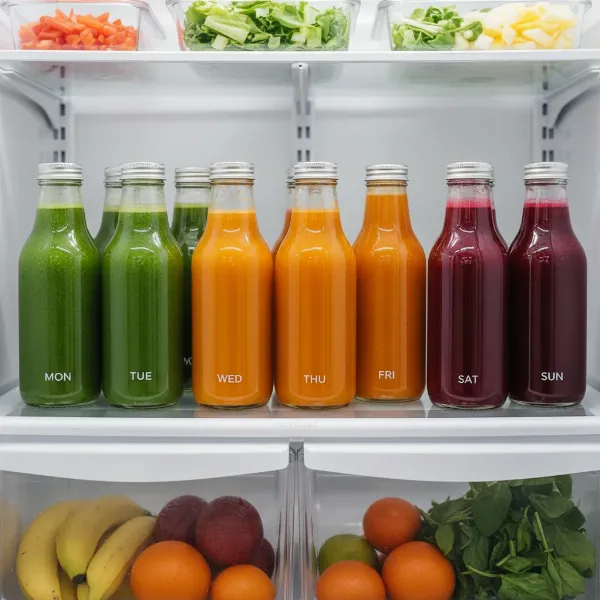
Embarking on the exciting journey of opening a juice bar means more than just a passion for healthy beverages; it requires smart investments in the right equipment. The heart of any successful juice operation is its juicer, a workhorse that dictates efficiency, juice quality, and ultimately, customer satisfaction. As an experienced technician with a decade in the juicer industry, I’ve seen firsthand how crucial it is to select machines that deliver on speed, durability, and a superior product. This comprehensive guide will navigate you through the world of commercial juicers, helping you pinpoint the perfect models to kickstart and grow your juice bar business.
Popular Types of Commercial Juicers
Understanding the different types of commercial juicers available is the first step in making an informed decision for your juice bar. Each type offers distinct advantages and disadvantages, making them suitable for various operational needs and desired juice qualities.
Centrifugal Juicers
Centrifugal juicers are renowned for their speed, making them an excellent choice for juice bars with high-volume demands. These machines use a rapidly spinning flat blade that grates produce against a mesh filter, separating the juice from the pulp through centrifugal force.
Pros:
- Speed: Ideal for quickly producing juice, crucial during peak hours.
- Ease of Use: Generally straightforward to operate, requiring minimal staff training.
- Cost-Effective: Often more affordable upfront compared to cold press models.
- Handles Hard Produce: Efficiently processes hard fruits and vegetables like apples and carrots.
Cons:
- Oxidation and Heat: The high-speed process can introduce heat and air, potentially leading to nutrient loss and a shorter shelf life for the juice.
- Lower Yield: May extract less juice from certain produce, especially leafy greens, resulting in more waste.
- Noise Level: Tends to be louder during operation, which can be a consideration for front-of-house placement.
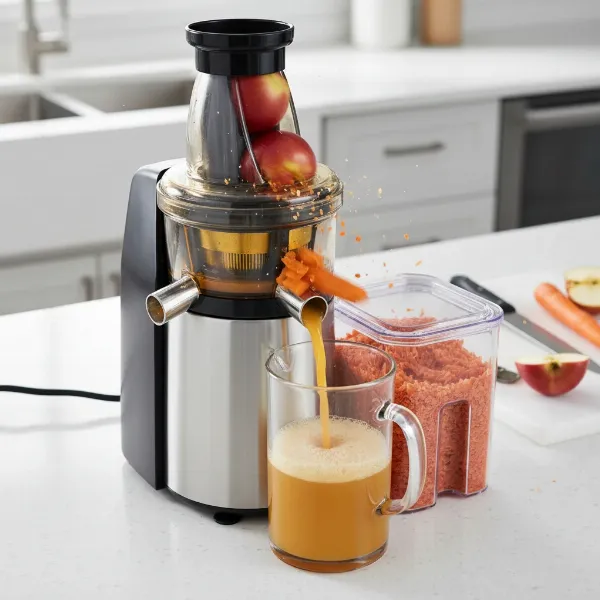 A commercial centrifugal juicer quickly extracting juice from fruits and vegetables, showing its fast process.
Masticating (Cold Press) Juicers
Masticating juicers, often referred to as slow juicers or cold press juicers, operate at much lower speeds, slowly crushing and pressing fruits and vegetables to extract juice. This gentle method minimizes heat and oxidation, preserving more nutrients and enzymes.
Pros:
- Superior Juice Quality: Produces juice with minimal oxidation, retaining more nutrients, vibrant color, and fresh flavor.
- Higher Yield: Exceptionally efficient at extracting juice from a wide variety of produce, including leafy greens, wheatgrass, and soft fruits.
- Longer Shelf Life: Juices typically last longer due to reduced oxidation.
- Quiet Operation: Operates much quieter than centrifugal models, enhancing the customer experience in open kitchen settings.
Cons:
- Slower Speed: Production is significantly slower, which can be a bottleneck in high-volume settings.
- Higher Cost: Generally a larger upfront investment.
- Preparation Time: May require more pre-cutting of produce due to smaller feed chutes.
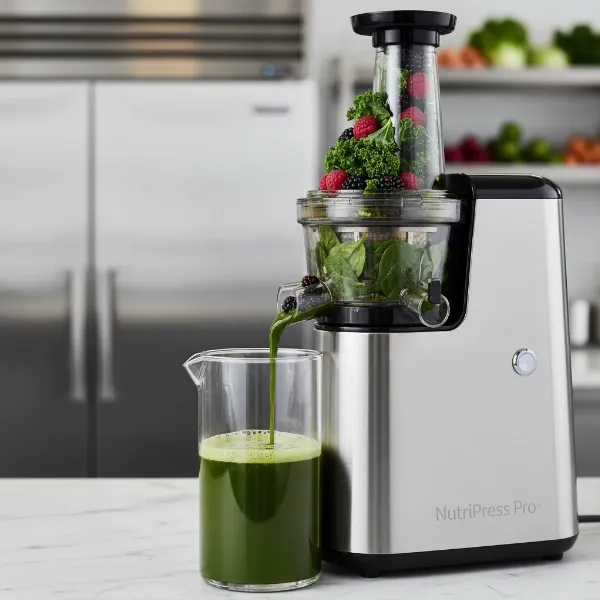 A commercial cold press masticating juicer slowly extracting nutrient-rich juice from leafy greens and soft fruits.
Hydraulic Press Juicers
Hydraulic press juicers represent the pinnacle of cold pressing technology, delivering the highest juice yield and quality. These machines first shred the produce into a pulp, which is then wrapped in cloths and subjected to immense pressure from a hydraulic press.
Pros:
- Maximum Yield and Nutrient Retention: Unmatched in extracting every last drop of juice and preserving its nutritional integrity.
- Exceptional Juice Quality: Produces the purest, most nutrient-dense juice with the longest shelf life.
- Versatility: Can handle virtually any fruit or vegetable, including fibrous greens and ginger.
Cons:
- Very High Cost: The most expensive type of commercial juicer.
- Labor Intensive: Requires manual bagging and loading of pulp, increasing labor time.
- Large Footprint: Typically larger than other juicer types, requiring more dedicated space.
Citrus Juicers
Dedicated citrus juicers are designed specifically for efficiently extracting juice from oranges, lemons, limes, and grapefruits. They often feature reamers that press against the fruit, or automatic feeding systems for high volume.
Pros:
- Efficiency for Citrus: Extremely fast and effective for citrus fruits.
- Clean Juice: Designed to prevent bitterness from citrus peels from entering the juice.
- Simple Operation: Many models are automatic or semi-automatic, reducing labor.
Cons:
- Limited Versatility: Cannot juice other types of fruits or vegetables.
- Specific Niche: Only suitable if citrus juice is a significant part of your menu.
Key Factors to Consider When Choosing a Commercial Juicer
Selecting the ideal commercial juicer for your juice bar involves more than just picking a type; it requires a thoughtful evaluation of several operational factors.
Output and Speed
Your juice bar’s potential volume is a critical consideration. If you anticipate serving hundreds of customers daily, especially during peak hours, a high-speed centrifugal or automatic citrus juicer might be necessary to keep up with demand. For specialty cold-pressed juices where quality and nutrient retention are paramount, a high-yield masticating or hydraulic press juicer, despite its slower speed, could be the right choice. Evaluate your projected hourly juice output needs to avoid bottlenecks.
Durability and Build Quality
Commercial environments demand equipment that can withstand continuous, heavy-duty use. Look for juicers constructed from robust materials like stainless steel, which resist corrosion, wear, and tear. Components like cutting discs, filters, and motors should be designed for longevity. Investing in a well-built machine minimizes breakdowns and costly repairs.
Ease of Cleaning and Maintenance
In a busy juice bar, time is money. A juicer that is difficult to disassemble and clean can significantly reduce operational efficiency. Prioritize models with:
- Quick Disassembly: Parts that can be easily removed for washing.
- Dishwasher-Safe Components: If applicable, this can further streamline cleanup.
- Minimal Crevices: Fewer hard-to-reach spots mean faster, more thorough cleaning.
- Continuous Pulp Ejection: Features like this prevent frequent stops for emptying pulp bins.
Versatility and Produce Compatibility
Consider the diversity of your menu. Will you only be juicing citrus, or do you plan to offer a wide array of fruit, vegetable, and leafy green blends?
- Citrus-only juicers are perfect for establishments focusing solely on orange or grapefruit juice.
- Centrifugal juicers excel with hard fruits and vegetables.
- Masticating juicers are superior for leafy greens, wheatgrass, and soft fruits, offering greater versatility for varied menus.
- Cold press machines like the Zumex Mastery can handle nearly anything.
Noise Level
The ambient noise level of your juice bar impacts the customer experience. If your juicing station is front-of-house or near seating areas, a quieter masticating or cold press juicer would be preferable. High-speed centrifugal juicers can be quite loud, which might be acceptable in a busy kitchen but disruptive in a quiet cafe.
Footprint and Size
Commercial kitchens often have limited counter space. Measure your available area and choose a juicer that fits comfortably without hindering other operations. Compact models are available for smaller spaces, while high-volume machines might require a dedicated area or even a stand.
Cost and ROI
Commercial juicers range widely in price. While it might be tempting to opt for the cheapest option, consider the long-term return on investment (ROI). A more expensive, durable, and efficient machine might have a higher upfront cost but could save you money in reduced labor, higher juice yield, and fewer maintenance issues over time. Also, inquire about warranties; a robust warranty indicates manufacturer confidence and protects your investment.
Top Commercial Juicer Models for Juice Bars
Choosing from the many excellent commercial juicers can be daunting. Here’s a look at some highly-regarded models, categorized by their primary strengths, to help you compare.
| Model | Type | Key Features | Pros | Cons | Ideal For |
|---|---|---|---|---|---|
| Omega J8006HDS Nutrition Center | Masticating (Slow) | Low 80 RPM, stainless steel, versatile food processing functions, quiet operation. | High juice yield, preserves nutrients, durable, quiet, versatile. | Slower juicing speed compared to centrifugal models. | Juice bars prioritizing quality, nutrient retention, and versatility. |
| Breville 800JEXL Juice Fountain Elite | Centrifugal | 1000-watt motor, two-speed control, titanium-reinforced disc, large chute. | Very fast, efficient for hard produce, large capacity, good value. | Not as effective for leafy greens, higher noise, some pulp left behind. | High-volume juice bars needing speed for hard fruits/veg. |
| Kuvings CS600/CS700 Whole Slow Juicer | Masticating (Slow) | 3.5-inch wide feed chute, 60 RPM, stainless steel/BPA-free components, Smart Cap. | Juices whole fruits/veg (less prep), high nutrient retention, easy to clean, durable. | High-end price, larger footprint. | Upscale juice bars focusing on organic, nutrient-dense, and diverse produce. |
| Nutrifaster N450 | Centrifugal | Heavy-duty, 1.25 HP motor, continuous pulp ejection, stainless steel body. | Built like a tank for non-stop action, easy to operate, fast cleanup, powerful. | Can be clunky to set up, requires manual operation. | High-volume juice bars needing extreme durability and speed for all produce types. |
| Zummo Z40 Nature | Automatic Citrus | Juices 40 fruits/minute, versatile for all citrus, auto filter, 4-gallon peel collector. | Extremely fast, no peel taste, stainless steel, high capacity, refurbished units available. | High price, basket not most durable. | Large-scale operations, hotels, or any business with high citrus juice demand. |
| Zumex Mastery | Hydraulic Cold Press | Fully programmable, built-in pusher, folding intake hopper. | Maximizes yield, virtually unlimited produce options, extremely durable. | Not a countertop model, high investment. | Specialized cold-pressed juice businesses and production facilities. |
| Santos 68 Cold Press Juicer | Cold Press | Quiet operation, high juice yield, robust stainless steel construction, advanced filtration. | Excellent juice quality, durable, quiet, easy to clean. | Slower process. | Health-focused juice bars prioritizing quality and customer experience. |
| Robot Coupe J80 Ultra Automatic Juicer | Centrifugal | Juices 120 liters/hour, automatic feed, large pulp container, direct juice extraction. | Exceptional speed for high demand, easy to use, durable. | Less effective for leafy greens. | Very high-volume establishments, buffets, or restaurants with consistent juice needs. |
“The right commercial juicer is an investment, not an expense. It’s about optimizing your operations and delivering a product that keeps customers coming back.” – Admin, JuicerBest.com, Commercial Juicer Specialist
Using and Maintaining Your Commercial Juicer
Proper usage and consistent maintenance are crucial for maximizing the lifespan and efficiency of your commercial juicer.
How to Use Your Commercial Juicer Correctly
- Read the Manual: Always refer to your specific model’s instruction manual for detailed guidelines.
- Prepare Produce: Wash fruits and vegetables thoroughly. For most juicers, pre-cutting may be required to fit the feed chute, especially for masticating models. Remove pits, large seeds, and tough skins.
- Feed Gradually: Avoid overloading the juicer. Feed produce at a steady pace to allow the machine to process it efficiently and prevent clogging or straining the motor.
- Monitor Pulp Bin: Keep an eye on the pulp collection bin and empty it before it becomes too full, especially with centrifugal juicers which eject pulp continuously.
- Safety First: Always use the food pusher provided and never your hands or other utensils to push produce into the chute. Ensure all safety locks are engaged before operation.
Cleaning Your Commercial Juicer After Each Use
Daily cleaning is non-negotiable for hygiene and performance.
- Unplug: Always unplug the juicer from the power outlet before disassembling or cleaning.
- Disassemble: Carefully take apart all removable components (pulp collector, juice collector, filter basket, auger/reamer, lid, etc.).
- Rinse Immediately: Rinse all parts under warm running water to remove most of the pulp and juice residue. This prevents drying, which makes cleaning much harder.
- Scrub Thoroughly: Use a brush (often provided with the juicer) to scrub the mesh filter basket or screen, as fine fibers can easily get trapped. Use warm, soapy water for all parts.
- Sanitize: Depending on your local health regulations, sanitize components using an approved food-safe sanitizer.
- Dry and Store: Allow all parts to air dry completely before reassembling or storing to prevent mold and mildew growth.
Tips for Extending Juicer Lifespan
- Regular Deep Cleaning: Periodically perform a more thorough cleaning, potentially soaking parts in a vinegar solution to remove mineral buildup.
- Inspect Parts: Regularly check for wear and tear on components like seals, gaskets, blades, and motors. Replace worn parts promptly.
- Lubrication: Some models may require periodic lubrication of certain moving parts. Consult your manual.
- Proper Storage: Store the juicer in a clean, dry area when not in use.
- Don’t Overwork: Avoid continuously running the machine beyond its recommended operational limits. Allow it to rest if it starts to overheat.
Where to Buy Commercial Juicers
Finding a reliable vendor for your commercial juicer is just as important as choosing the right model. The quality of sales and after-sales support can significantly impact your ownership experience.
Reputable Retailers and Suppliers
- Specialty Restaurant Supply Stores: These stores, both online and brick-and-mortar, specialize in commercial-grade kitchen equipment. They often have knowledgeable staff who can provide expert advice and cater to specific business needs. Websites like WebstaurantStore are excellent examples.
- Manufacturer Websites: Purchasing directly from the manufacturer ensures you get genuine products, full warranties, and direct access to customer support and parts.
- Large Online Marketplaces: While convenient, exercise caution on general marketplaces. Ensure the seller is an authorized dealer and offers proper commercial warranties. Always read reviews specific to the seller.
Considerations When Buying Online
- Warranty and Returns: Verify the warranty period and the return policy. Commercial warranties are typically more robust than residential ones.
- Shipping and Delivery: Check shipping costs and estimated delivery times, especially for heavy equipment.
- Customer Reviews: Look for reviews from other business owners who have used the juicer in a commercial setting.
- Technical Support: Confirm that technical support and spare parts are readily available.
Refurbished or Used Options
If budget is a significant constraint, refurbished commercial juicers from reputable sellers can offer excellent value. These units are typically cleaned, tested, and have worn-out parts replaced, providing performance similar to new at a lower cost. However, always verify the seller’s reputation and any warranty offered on refurbished units.
Commercial Juicer Buying Guide
Making the final decision on a commercial juicer boils down to aligning your business needs with the machine’s capabilities.
- Define Your Menu & Volume:
- What types of juices will you primarily offer (citrus, green, hard vegetable, mixed)?
- What is your estimated daily and peak hourly juice production volume? This dictates whether you need speed (centrifugal) or quality/yield (masticating/cold press).
- Will the juicer be used for other functions like nut milks or sorbets?
- Set Your Budget:
- Establish a realistic budget for your initial equipment investment, but remember to factor in potential long-term savings from efficiency and durability.
- Consider refurbished options from trusted sources if budget is tight.
- Prioritize Key Features:
- Yield: How much juice do you need from your produce? Masticating and cold press offer higher yield.
- Speed: Is rapid production essential for your operation? Centrifugal juicers are faster.
- Durability: Does the machine have a robust construction (e.g., stainless steel) to withstand commercial use?
- Ease of Cleaning: Can your staff quickly and efficiently clean the unit between uses?
- Noise Level: Will the juicer be in a customer-facing area?
- Footprint: Does it fit your available counter or floor space?
- Research and Compare Models:
- Use comparison tables (like the one above) and detailed product reviews to weigh the pros and cons of specific models.
- Look for insights from other juice bar owners or restaurant professionals.
- Evaluate Warranty and Support:
- A strong manufacturer’s warranty and accessible customer service are vital for commercial equipment.
- Confirm availability of spare parts for timely repairs.
By methodically addressing these points, you can confidently select a commercial juicer that not only meets your operational demands but also contributes to the overall success and profitability of your juice bar.
Conclusion
Embarking on the journey of a juice bar owner is exciting, and equipping your business with the right tools is paramount. The perfect commercial juicer is more than just an appliance; it’s a strategic investment that underpins your efficiency, product quality, and customer satisfaction. From the rapid output of a centrifugal model to the nutrient-preserving power of a cold press, each type offers distinct advantages tailored to different business models and menu offerings.
Ultimately, your choice should balance speed, yield, durability, and ease of maintenance with your budget and the unique demands of your operation. Remember to consider factors like noise level, footprint, and the availability of reliable support and warranties. With careful consideration and a focus on long-term value, you can select a juicer that will serve as a tireless partner in delivering delicious, healthy beverages to your customers for years to come. What kind of vibrant, fresh juices will you create with your new commercial juicer?
Frequently Asked Questions
What is the primary difference between a centrifugal and a masticating commercial juicer?
The main difference lies in their operation and impact on juice quality. Centrifugal juicers are faster, using high-speed blades and centrifugal force, but this can introduce heat and oxidation. Masticating juicers operate slowly, crushing and pressing produce, which preserves more nutrients and results in a higher yield and longer-lasting juice.
How important is the feed chute size on a commercial juicer?
The feed chute size is crucial for efficiency. A wider feed chute allows you to insert whole fruits and vegetables, significantly reducing preparation time by eliminating the need for extensive pre-cutting. This can be a major time-saver in a busy commercial setting.
Can I use a home juicer for my juice bar?
No, home juicers are not designed for the continuous, heavy-duty operation required in a commercial juice bar. They lack the durability, power, and capacity to handle high volumes of produce, leading to rapid wear-and-tear, frequent breakdowns, and inefficient juice production. Investing in a commercial-grade juicer is essential for business longevity.
What maintenance is required for commercial juicers?
Regular maintenance includes daily disassembly and thorough cleaning of all removable parts with warm, soapy water and a brush, especially the mesh filter. Periodic deep cleaning, inspection for worn parts, and prompt replacement of any damaged components are also crucial to ensure hygiene, optimal performance, and to extend the juicer’s lifespan.
How much should I budget for a good commercial juicer?
The budget for a commercial juicer can vary significantly, from a few hundred dollars for basic citrus models to several thousand for high-end cold press or automatic industrial machines. Expect to invest more for durability, higher yield, and advanced features. Prioritize value and ROI over the lowest upfront cost, considering long-term operational savings.