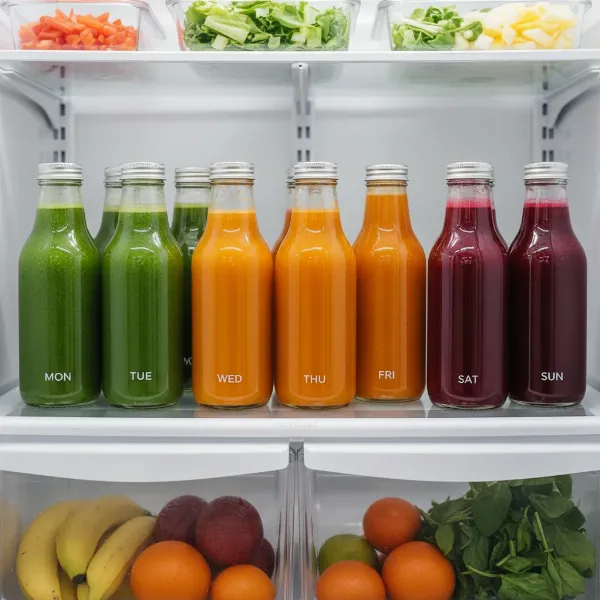
Embarking on a juicing journey can be a game-changer for your health, but choosing the right juicer is often the first hurdle. For years, two names have dominated the conversation among juice enthusiasts and health-conscious individuals: Breville and Omega. Both brands are titans in the world of juice extraction, yet they offer distinctly different approaches to transforming fruits and vegetables into nutrient-rich beverages. As an experienced technician with a decade in the field, I understand that selecting the perfect juicer isn’t just about brand loyalty; it’s about aligning a machine’s capabilities with your specific lifestyle, preferences, and health goals. This comprehensive guide will dissect the offerings from Breville and Omega, providing the insights you need to confidently pick the juicer that will best serve your quest for liquid vitality.
Understanding Common Juicer Types: Centrifugal vs. Masticating
Before diving into a direct brand comparison, it’s essential to understand the two primary technologies that define the Breville and Omega juicer lines: centrifugal and masticating. Your choice between these methods will profoundly impact your juicing experience, from speed and noise to juice quality and versatility.
Centrifugal Juicers primarily operate at high speeds, using a flat cutting blade that spins against a mesh filter. As produce is pushed down the chute, the blades rapidly shred it, and centrifugal force then separates the juice from the pulp. This method is the hallmark of many Breville models, celebrated for its efficiency and speed. The advantages include quick juice extraction, often in mere seconds, and typically wider feed chutes that accommodate whole fruits and vegetables, minimizing prep time. However, the high-speed operation can introduce more heat and air, leading to increased oxidation and potentially reducing the juice’s nutrient content and shelf life. They are also notoriously louder and less efficient with leafy greens or wheatgrass, often producing wetter pulp and lower yields for these delicate ingredients.
Masticating Juicers, also known as slow juicers or cold-press juicers, utilize a different, gentler approach. They feature a single or twin auger that slowly crushes and presses produce against a screen, effectively “chewing” the ingredients to extract juice. This low-speed process is characteristic of most Omega juicers, and it’s favored for its ability to preserve nutrients. The benefits of masticating juicers are numerous: they produce juice with minimal heat and oxidation, leading to a higher nutritional value, richer taste, and longer storage life. They excel at juicing leafy greens, wheatgrass, and other fibrous vegetables, yielding significantly more juice and much drier pulp. Masticating juicers are also considerably quieter in operation and often offer multi-purpose functionality, acting as “nutrition centers” capable of making nut milks, sorbets, baby food, and even pasta. The trade-offs include a slower juicing process, which requires more time, and typically smaller feed chutes, necessitating more pre-chopping of produce.
Breville vs. Omega Juicers: A Head-to-Head Comparison
When evaluating Breville and Omega, we’re essentially comparing two different philosophies of juicing, each with its own strengths and weaknesses.
Juicing Performance and Yield
|
Our Picks for the Best Juicer in 2026
As an Amazon Associate I earn from qualifying purchases.
|
||
| Num | Product | Action |
|---|---|---|
| 1 | AMZCHEF Cold Press Juicer, Juicers Machines - 5.4\" Large Feed Chute for Whole Fruits & Vegetables, Stainless Steel Slow Masticating Juice Easy to Clean, Large Auger, Triple Strainers |

|
| 2 | Juicer Machines, 5.3\" Wide Feed Chute Cold Press Juicer for Whole Vegetables & Fruits, High Juice Yield, BPA Free (Slivery) |
|
| 3 | Qcen Juicer Machine, 800W Centrifugal Juicer Extractor with Wide Mouth 3” Feed Chute for Fruit Vegetable, Easy to Clean, Stainless Steel, BPA-free (Black) |
|
| 4 | Qcen Juicer Machine, 500W Centrifugal Juicer Extractor with Wide Mouth 3” Feed Chute for Fruit Vegetable, Easy to Clean, Stainless Steel, BPA-free (Black) |
|
| 5 | Ninja NeverClog Cold Press Juicer, Powerful Slow Juicer with Total Pulp Control, Countertop, Electric, 2 Pulp Functions, Dishwasher Safe, 2nd Generation, Charcoal, JC151 |
|
| 6 | Cold Press Juicer Machines with 5.8\" Large Feed Chute, Juicer for Whole Vegetables & Fruits, High Juice Yield (Grey) |
|
| 7 | Juicer Machines, Juilist 3\" Wide Mouth Juicer Extractor Max Power 800W, for Vegetable and Fruit with 3-Speed Setting, 400W Motor, Easy to Clean |
|
| 8 | Ninja NeverClog Cold Press Juicer, Powerful Slow Juicer with Total Pulp Control, Countertop, Electric, 2 Pulp Functions, Dishwasher Safe, 2nd Generation, Blue/Navy, JC151NV |
|
| 9 | Hamilton Beach Juicer Machine, Big Mouth 3” Feed Chute for Whole Fruits and Vegetables, Easy to Clean, Centrifugal Extractor, Vegetable & Fruit Juicer, BPA Free, 800W Motor, Black |
|
| 10 | Juicer Machines with 5.8\" Large Feed Chute, Cold Press Juicer for Whole Vegetables and Fruits 400W, Slow Masticating juicer Easy to Clean Juice Extractor Machine High Juice Yield |
|
The performance of a juicer heavily depends on the type of produce you’re processing.
For hard fruits and vegetables like apples, carrots, and beets, Breville’s powerful centrifugal juicers are exceptionally fast, transforming whole produce into juice in a matter of seconds. They offer impressive speed and are ideal for quick, large batches of juice from robust ingredients. However, while fast, the pulp from centrifugal juicers can sometimes be wetter, suggesting some juice is left behind.
Omega’s masticating juicers, though slower, are meticulously efficient. They systematically grind and squeeze produce, extracting a high volume of juice, particularly noticeable in the very dry pulp they produce. While you’ll spend more time on pre-chopping and the actual juicing process, Omega often delivers a superior yield, especially from dense or fibrous produce, maximizing every ingredient.
When it comes to leafy greens and wheatgrass, Omega juicers are the undisputed champions. Their slow, pressing action extracts juice from these delicate and fibrous ingredients with remarkable efficiency, yielding significantly more juice and leaving behind very dry pulp. Breville’s centrifugal models, on the other hand, struggle with leafy greens; the fast spinning action can sometimes shred them inadequately, leading to lower yields and wetter, chunkier pulp, making them less ideal for serious green juice enthusiasts.
Juice Quality and Nutrient Retention
This is where the core technological difference between the brands becomes most apparent.
Omega’s masticating juicers are designed with nutrient preservation as a top priority. By operating at low speeds (typically 40-80 RPM), they minimize heat buildup and air exposure, which are the primary culprits behind oxidation and nutrient degradation. The result is a vibrant, flavorful juice that retains more enzymes, vitamins, and minerals, and has a longer shelf life, often up to 72 hours when refrigerated. This makes Omega a preferred choice for those focused on the maximum health benefits of cold-pressed juice.
While traditional centrifugal juicers like many Breville models operate at high speeds, leading to some oxidation, Breville has innovated with “Cold Spin Technology” in some of its newer centrifugal lines. This technology aims to transfer less than 1.8°F of heat to the juice, mitigating some of the oxidation issues. Despite these advancements, a centrifugal juicer, by its very nature, will still introduce more air than a masticating juicer. For immediate consumption, Breville juices are excellent, but they generally have a shorter shelf life and might show signs of separation or degradation sooner than cold-pressed juice.
Speed and Convenience
For those with busy mornings or a desire for instant gratification, Breville’s centrifugal juicers often take the lead. Their powerful motors and wide feed chutes allow you to process whole fruits and vegetables with minimal pre-cutting, delivering a glass of fresh juice in mere seconds. This speed and ease of preparation are significant conveniences for daily juicers.
Omega’s masticating juicers, while highly efficient in extraction, are inherently slower. The “slow” in “slow juicer” means you’ll need more time for both preparation (due to smaller feed chutes requiring chopping) and the actual juicing process. However, many users find this a worthwhile trade-off for the superior juice quality and yield.
Durability and Build Quality
Both Breville and Omega are respected brands known for producing high-quality appliances.
Breville juicers often feature sleek, modern designs with robust materials like brushed stainless steel. They are built to be powerful and durable for their intended use as fast juicers. Many users appreciate their aesthetic appeal that fits well in contemporary kitchens.
Omega juicers, particularly their masticating models, are often described as workhorses. They are built for longevity and consistent, heavy-duty use, utilizing heavy-duty plastics and robust augers. Omega’s reputation is built on reliability and performance over flashy design, though they offer a range of styles.
Noise Level
This is a stark differentiator. Breville’s centrifugal juicers operate at very high RPMs, generating a significant amount of noise comparable to a blender. This can be disruptive, especially in quiet environments or early mornings.
In contrast, Omega’s masticating juicers operate at much lower speeds, making them significantly quieter. You can often have a conversation or enjoy a peaceful morning while your Omega juicer works, a major advantage for many users.
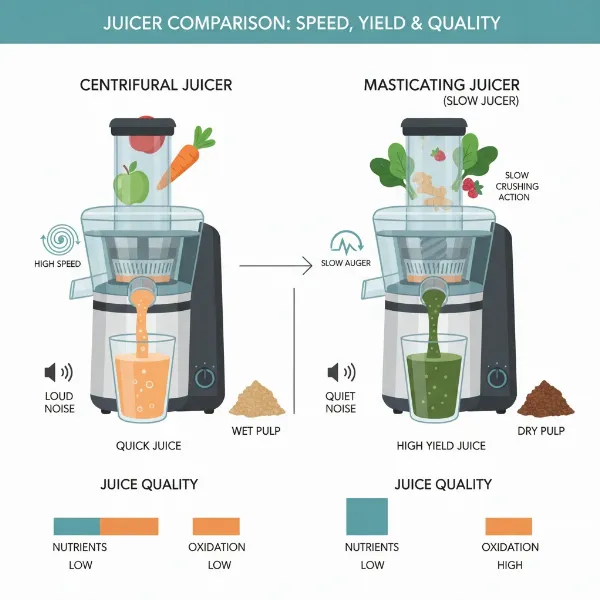 A conceptual diagram illustrating the differences between centrifugal and masticating juicers for comparison.
Ease of Cleaning
Cleaning is an unavoidable part of juicing. Both brands have made strides to simplify this process.
Many Breville models feature parts that are dishwasher-safe, and their simpler mechanism can make for relatively quick rinsing. However, the fine mesh screen in centrifugal juicers can sometimes be challenging to clean thoroughly if not done immediately, as pulp can get stuck.
Omega juicers, despite having more parts for assembly, often boast designs that make individual components easy to rinse clean. Many users report that the auger and screen are relatively straightforward to clean, especially with the included brushes. The dryer pulp from masticating juicers can sometimes make cleaning easier than the sticky, wetter pulp from centrifugal machines.
Warranty
A strong warranty is a testament to a manufacturer’s confidence in its product’s durability.
Omega stands out in this regard, offering some of the best warranties in the industry, often ranging from 10 to a remarkable 15 years on motor and parts for many of its masticating juicers. This exceptional coverage provides long-term peace of mind.
Breville typically offers shorter warranties, often between 1 to 5 years, depending on the specific model. While still respectable, it doesn’t quite match Omega’s industry-leading commitment to longevity.
Price
The initial investment for a juicer can vary significantly.
Breville offers a broader price range, with entry-level centrifugal juicers starting around $100 and premium models extending to $300-$400. This makes Breville more accessible to those on a tighter budget or new to juicing.
Omega juicers, particularly their popular masticating models, generally fall into the mid-range to premium category, with most models priced between $150 and $400 or more. The higher price often reflects their specialized technology, durability, and extensive warranty.
Versatility
Beyond just making juice, some machines offer additional functionalities.
Omega’s “Nutrition Centers” (many of their masticating models) are renowned for their versatility. With various attachments, they can extrude pasta, make nut butter, grind coffee and spices, prepare baby food, and whip up sorbets from frozen fruit. This makes them a true multi-purpose kitchen appliance.
Breville also offers some versatile options, particularly their “Bluicer” range, which combines a juicer and a blender into one unit, allowing you to create both fresh juices and smoothies with a single appliance. Breville also has dedicated citrus presses for specific needs.
Choosing Your Perfect Juicer: Key Considerations
Deciding between Breville and Omega boils down to understanding your priorities and juicing habits.
- Your Juicing Habits: How often will you juice? What types of produce are your staples? If you mainly juice hard fruits and value speed above all else, a Breville centrifugal juicer might be ideal. If leafy greens, wheatgrass, and maximum nutrient retention are your focus, and you don’t mind a slower process, an Omega masticating juicer is likely a better fit.
- Desired Juice Quality: Are you seeking a quick, refreshing drink, or a nutrient-dense, long-lasting health elixir? Omega’s cold-press technology delivers superior nutrient retention and a richer juice quality.
- Budget: Consider your initial investment. Breville offers more budget-friendly entry points, while Omega requires a higher upfront cost but often justifies it with longevity and performance.
- Kitchen Space: Both brands offer models of varying sizes. Consider your countertop space and storage availability. Some Omega vertical masticating juicers are designed to be more compact.
- Noise Sensitivity: If noise is a concern in your household, Omega’s quiet operation will be a significant advantage over Breville’s louder centrifugal models.
Comparison Table: Breville vs. Omega Juicers (General Overview)
| Feature | Breville Juicers (Centrifugal) | Omega Juicers (Masticating) |
|---|---|---|
| Primary Technology | Centrifugal (Fast) | Masticating/Cold Press (Slow) |
| Speed | Very fast (seconds) | Slower (minutes), requires more prep |
| Juice Quality | Good for immediate consumption; some oxidation (less with Cold Spin) | Excellent; minimal oxidation, high nutrient retention, longer shelf life |
| Yield (Hard Produce) | Good, very fast | Excellent, but slower |
| Yield (Leafy Greens) | Moderate to low, wetter pulp | Excellent, very dry pulp |
| Noise Level | Loud | Very quiet |
| Durability | High-quality materials, robust | “Workhorse” build, exceptional longevity |
| Warranty | Typically 1-5 years | Industry-leading 10-15 years |
| Price Range | $100 – $400+ | $150 – $600+ |
| Versatility | Some models blend & juice (Bluicer), citrus presses | “Nutrition Centers” for nut butters, pasta, sorbet, baby food |
| Footprint | Varies, some wide, often sleek | Varies, some robust horizontal, some compact vertical |
| Ease of Cleaning | Generally easy, but mesh screen can be tricky | Generally easy, dry pulp helps |
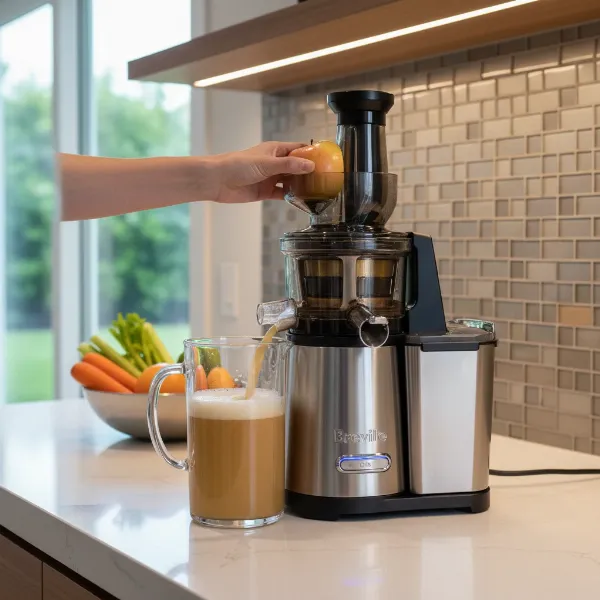 A sleek Breville centrifugal juicer on a modern kitchen counter with fresh fruits beside it, emphasizing speed and design.
Using and Maintaining Your Juicer
Regardless of whether you choose a Breville or an Omega, proper usage and diligent cleaning are key to maximizing your juicer’s performance and lifespan.
For centrifugal juicers, always ensure firm pressure when pushing produce through the chute to extract the most juice. Clean the mesh filter immediately after use to prevent pulp from drying and hardening, making it significantly easier to scrub clean.
For masticating juicers, feed produce slowly and steadily, allowing the auger to fully process each piece. This prevents clogging and ensures optimal extraction. Like centrifugal juicers, cleaning soon after use is best, paying particular attention to the auger and screen.
For both types, regular maintenance, such as checking for wear and tear on seals or screens and replacing them if needed, can significantly extend the life of your appliance. Always consult your specific model’s manual for detailed instructions on assembly, disassembly, cleaning, and maintenance to ensure safe and efficient operation.
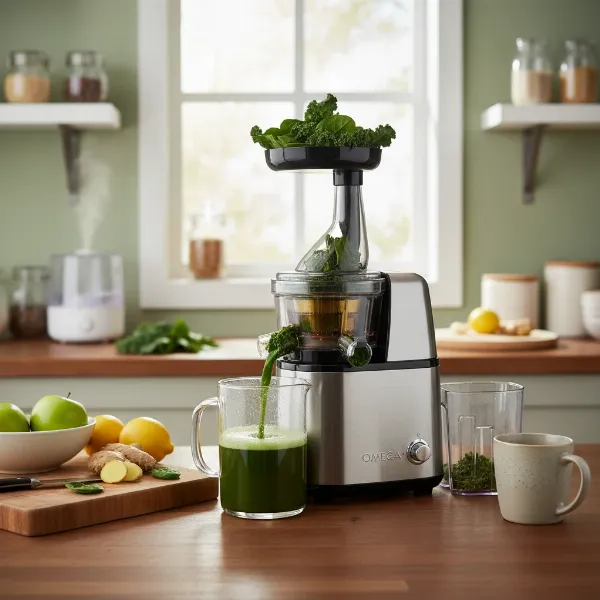 An Omega masticating juicer extracting juice from leafy greens, highlighting its quiet operation and efficiency with greens.
Where to Purchase Breville and Omega Juicers
When you’re ready to make your investment, it’s crucial to purchase from reputable retailers to ensure you receive an authentic product, valid warranty, and reliable customer support.
You can find both Breville and Omega juicers at major electronics and home goods stores, as well as specialized kitchen appliance retailers. Online marketplaces are also popular options, offering a wide selection and competitive pricing. When buying online, always verify the seller’s authenticity and read customer reviews to ensure a positive purchasing experience. Pay close attention to the warranty policy offered by the seller, as well as the brand’s official warranty, which can be a significant benefit, especially with Omega’s extended coverage. Understanding the return and exchange policies before purchase is also a wise practice.
Buying Guide: Finding Your Ideal Juicer
To simplify your decision, consider these steps:
- Define Your Juicing Priorities: Do you value speed, maximum nutrient retention, versatility, or quiet operation above all else? Your answer will strongly lean you towards one technology over the other.
- Assess Your Produce Preferences: If leafy greens, wheatgrass, and high-quality juice are paramount, Omega’s masticating juicers are your best bet. If you mostly juice hard fruits and vegetables and need juice fast, Breville’s centrifugal options are excellent.
- Set a Budget: Determine how much you’re willing to invest. Remember to factor in the long-term value, including warranty and potential versatility.
- Consider Your Kitchen Space and Lifestyle: Account for the size of the unit and how much time you’re willing to dedicate to prep and cleaning.
- Read Model-Specific Reviews: While this comparison provides a general overview, dive into reviews for specific Breville and Omega models that catch your eye to gather more detailed user experiences.
> “The best juicer isn’t necessarily the most expensive or the fastest; it’s the one that you will actually use consistently, aligning perfectly with your daily routine and health aspirations.” – JuicerBest Admin, Juicing Technology Specialist
Conclusion
Choosing between Breville and Omega juicers ultimately comes down to a personal alignment with their core strengths. Breville typically champions speed, convenience, and modern design, making it an excellent choice for those seeking quick, efficient juicing of most common fruits and vegetables. Omega, on the other hand, excels in meticulous extraction, superior nutrient preservation, quiet operation, and exceptional versatility, appealing to health enthusiasts focused on maximizing the nutritional value from a wider range of produce, especially greens. Both brands offer quality, but their differing approaches mean that the “best” juicer is the one that flawlessly integrates with your lifestyle and helps you achieve your wellness goals. What aspects of juicing matter most to you in your daily routine?
Frequently Asked Questions
Can I juice celery effectively with both Breville and Omega juicers?
While both can juice celery, Omega masticating juicers are significantly more effective. Their slow, powerful crushing action extracts more juice from fibrous celery stalks, yielding drier pulp and a greater volume of juice compared to Breville’s centrifugal models, which may leave more moisture in the pulp.
Are Breville or Omega juicers easier to clean?
The ease of cleaning can depend on the specific model and user habits. Generally, Breville centrifugal juicers can be quicker to rinse due to fewer parts, but their fine mesh filters sometimes require more effort to thoroughly clean stuck pulp. Omega masticating juicers, despite having more components, often have parts that are easy to rinse and produce drier pulp, which can simplify cleaning.
Which brand offers better value for money in the long run?
Omega juicers often represent better long-term value due to their superior juice yield (especially for expensive greens), higher nutrient retention, and industry-leading warranties (10-15 years). While their initial cost might be higher than some Breville models, their durability and efficiency can lead to savings on produce and replacements over time.