In our fast-paced world, finding time for healthy habits like juicing can feel like a luxury. You know the incredible benefits of fresh, vibrant juices—from boosting immunity to enhancing energy—but the thought of extensive fruit and vegetable preparation often stands between you and your daily dose of wellness. Many aspiring juicers get bogged down by the initial chopping, peeling, and cleaning, turning a simple routine into a daunting chore.
This article is your ultimate guide to streamlining your juicing preparation, designed to save you precious time without compromising on nutritional value or taste. We’ll explore smart strategies, essential techniques, and expert tips to transform your juicing routine into an efficient, enjoyable part of your day. Get ready to embrace your juicer with confidence, knowing you can achieve fresh, homemade juice quickly and consistently.
The Foundation of Fast Juicing: Proper Washing Techniques
The first and arguably most critical step in preparing fruits and vegetables for your juicer is thorough washing. This isn’t just about cleanliness; it’s about safeguarding your health and preserving the integrity of your fresh juice. Produce often carries pesticides, dirt, wax, and even bacteria from farm to market. A proper wash removes these unwanted elements, ensuring your juice is pure and delicious.
For general cleaning, rinsing under cold running water is a good start, but for truly effective purification, consider a produce wash or a homemade solution. A popular method involves soaking your produce in a mixture of one part white vinegar to ten parts water for 15-30 minutes, or using a baking soda bath with two tablespoons of baking soda dissolved in a sink full of water. These methods are highly effective at breaking down residues and killing surface bacteria. After soaking, always rinse your produce thoroughly under running water to remove any lingering solution. To save time, consider batch washing all your produce at the beginning of the week or before a dedicated juicing session, allowing it to air dry or patting it dry with a clean towel before storage.
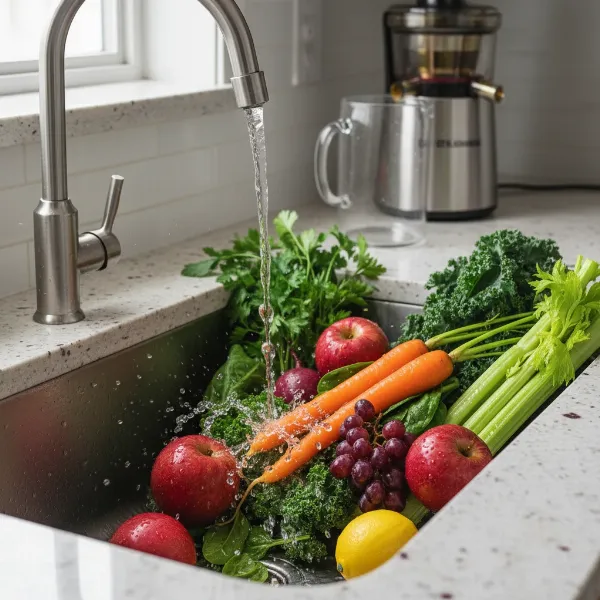 A variety of fresh fruits and vegetables being thoroughly washed in a kitchen sink, emphasizing cleanliness and preparing for juicing.
Peel or Not to Peel: A Strategic Choice for Speed and Nutrition
One of the quickest ways to save time in juicing prep is understanding when to peel your produce—and, more importantly, when not to. Many fruits and vegetables hold a significant concentration of beneficial nutrients, fiber, and antioxidants directly in or just beneath their skin. Skipping the peel where appropriate not only saves time but also boosts the nutritional profile of your juice.
As a general rule, if the peel is edible, organic, and doesn’t significantly impact the flavor or texture of your juice, leave it on. For instance, the skins of organic apples, carrots, cucumbers, and many pears are perfectly fine to juice and offer added benefits. However, some peels are best removed. Citrus fruits (oranges, lemons, grapefruit) have bitter rinds that can overpower your juice and often contain oils that some find undesirable. Pineapples also have tough, inedible skins that should be removed. For vegetables like beets, while the skin is technically edible, many prefer to peel them to avoid an “earthy” flavor in their juice. Understanding these distinctions allows for a quicker, more informed preparation process.
The Art of the Chop: Sizing for Juicer Efficiency
Proper chopping isn’t just about fitting produce into your juicer; it’s about optimizing extraction, preventing clogs, and protecting your appliance. The ideal size of your chopped ingredients largely depends on your specific juicer model—centrifugal juicers often handle larger pieces, while masticating (slow) juicers typically require smaller, more uniform cuts to prevent strain and ensure maximum yield.
For larger items like pineapples or melons, cutting them into quarters or smaller, manageable chunks is usually sufficient. When dealing with fibrous greens like celery, parsley, or kale, it’s crucial to cut them into shorter lengths, typically 2-3 inches for celery stalks, to prevent them from tangling around the juicer’s auger or shredding disc. Rolling up leafy greens before feeding them into the juicer can also help them process more effectively. Harder produce, such as carrots and ginger, should be cut into pieces that easily fit the feed chute without forcing, reducing motor strain and ensuring a smooth juicing process. Batch chopping your produce at the start of your week can dramatically cut down daily prep time, making it easy to grab and juice.
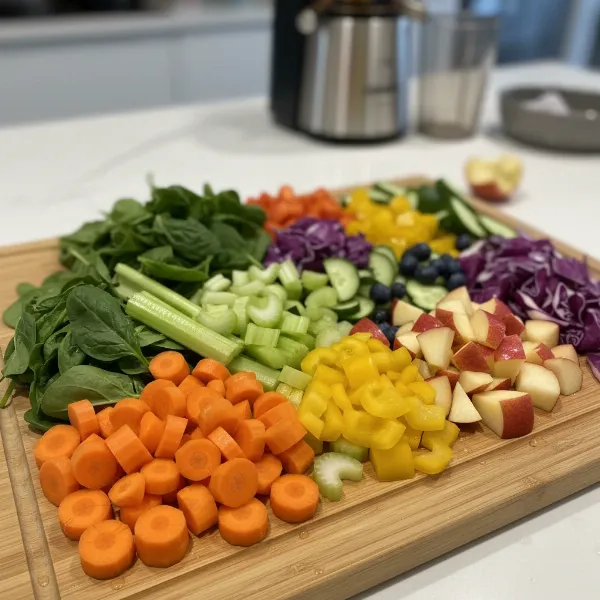 Various pre-chopped fruits and vegetables (carrots, celery, apples, spinach) neatly arranged on a cutting board, ready for a juicer, showcasing efficient preparation.
Smart Storage: Keeping Prepped Produce Fresh for Days
One of the most effective strategies for saving time in your juicing routine is to prep a larger batch of fruits and vegetables in advance and store them correctly. This “meal prep” approach for juicing ingredients means you only have to wash and chop once, and then your produce is ready for multiple juicing sessions throughout the week.
After washing and chopping, proper storage is key to maintaining freshness and nutrient content. Store different types of produce separately in airtight containers in the refrigerator. Leafy greens benefit from being stored with a damp paper towel to maintain moisture, while harder fruits and vegetables can be kept in sealed bags or containers. Be mindful that some produce, like berries, is best washed only on the day you plan to juice them to prevent premature spoilage. A vinegar bath, as mentioned earlier, not only cleans but can also extend the shelf life of produce by inhibiting mold growth. For longer-term storage, some fruits and vegetables can be frozen after chopping, though this method is often better suited for blending into smoothies as freezing can alter the texture, making them less ideal for direct juicing.
“Efficient juicing begins long before the machine turns on. By investing a small amount of time into strategic washing and chopping at the start of your week, you can drastically cut down your daily juicing time, making healthy habits more sustainable.” – Admin, JuicerBest.com, Juicing Technology Expert
Advanced Prep Hacks for the Busy Juicer
Beyond the basics, several advanced strategies can supercharge your juicing efficiency, especially if you lead a busy lifestyle. These hacks are designed to integrate juicing seamlessly into your routine, turning it from a chore into a quick and easy habit.
Consider dedicating a “weekend warrior” prep session where you handle all washing, peeling (where necessary), and chopping for the entire week’s worth of juice recipes. This batch prepping is a game-changer for daily consistency. Utilize kitchen tools like mandolines for quickly slicing hard vegetables or a food processor for dicing certain ingredients, though be cautious not to over-process to avoid mush. Pre-portioning your prepped fruits and vegetables into individual containers or bags for each day’s specific juice recipe can further streamline the morning rush. For tricky produce like fibrous greens or soft fruits, alternate them with harder, juicier items when feeding your juicer; this helps push everything through more efficiently and maximizes yield. Integrating your juicing prep into your broader meal prep routine not only saves time but also ensures a consistent supply of healthy ingredients for all your culinary needs.
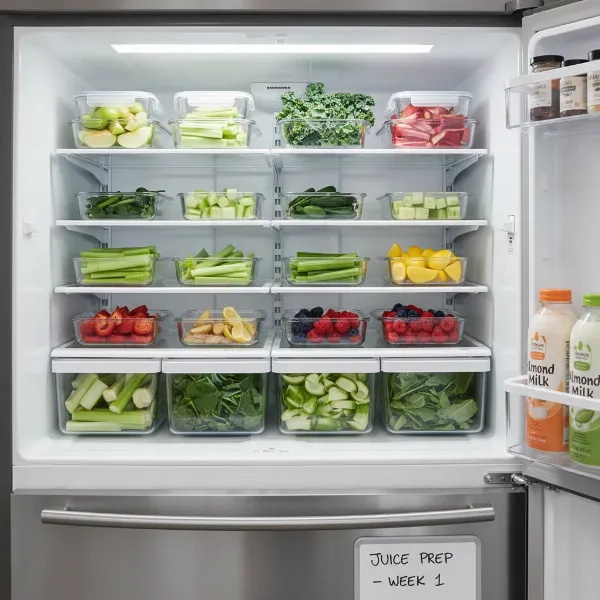 Transparent meal prep containers filled with pre-portioned, ready-to-juice fruits and vegetables, neatly stacked in a refrigerator, symbolizing organized and time-saving juicing.
Common Juicing Prep Challenges and Quick Solutions
Even with the best intentions, juicing prep can sometimes present challenges. Fibrous produce, for example, can be notorious for tangling in the juicer, leading to clogs and reduced yield. The solution lies in careful chopping—ensuring celery stalks are cut into short segments and leafy greens are rolled tightly or chopped before feeding. Alternating these fibrous items with harder, denser fruits or vegetables (like apples or carrots) can help push them through the machine more effectively.
Another common concern is foam, especially with centrifugal juicers. While some foam is normal, excessive amounts can be minimized by feeding produce slowly and consistently, and by ensuring your ingredients are firm and fresh. Oxidation, where prepped fruits like apples or pears turn brown, can be easily prevented by tossing them with a small amount of lemon juice or storing them in an airtight container immediately after cutting. Addressing these minor hurdles with simple solutions ensures your prep time remains efficient and your juicing experience enjoyable.
Beyond Prep: Optimizing Your Overall Juicing Routine
Mastering fruit and vegetable preparation is more than just a time-saver; it fundamentally enhances your entire juicing experience. When your produce is perfectly washed, strategically peeled, and correctly chopped, the actual juicing process becomes smoother, faster, and more efficient. Your juicer operates under less strain, which can prolong its lifespan, and the yield of juice is often optimized, meaning you get more goodness from your ingredients.
Furthermore, an organized prep routine directly translates into easier cleanup. Less struggling with tangled fibers or improperly sized chunks means a cleaner juicing chamber and less pulp residue to deal with. By integrating these prep strategies into your daily or weekly schedule, you’ll find that making fresh juice is no longer a burdensome task but a quick, rewarding step toward a healthier lifestyle. The more seamless your prep, the more likely you are to stick with your juicing habit, consistently enjoying the health benefits.
Conclusion
Efficient preparation is the cornerstone of a successful and sustainable juicing routine. By adopting smart strategies for washing, making informed decisions about peeling, mastering the art of chopping, and utilizing clever storage techniques, you can drastically reduce the time and effort involved in making fresh juice. This proactive approach not only saves you minutes each day but also ensures you’re extracting maximum nutrition and flavor from every fruit and vegetable. Embrace these tips to transform your juicing experience into a quick, enjoyable, and effortless part of your healthy lifestyle. What is your go-to time-saving juicing hack?
Frequently Asked Questions
Do I have to peel all fruits and vegetables before juicing?
|
Our Picks for the Best Juicer in 2026
As an Amazon Associate I earn from qualifying purchases.
|
||
| Num | Product | Action |
|---|---|---|
| 1 | Juicer Machines with 5.8\" Large Feed Chute, Cold Press Juicer for Whole Vegetables and Fruits 400W, Slow Masticating juicer Easy to Clean Juice Extractor Machine High Juice Yield |

|
| 2 | Cold Press Juicer Machines with 5.8\" Large Feed Chute, Juicer for Whole Vegetables & Fruits, High Juice Yield (Grey) |
|
| 3 | AMZCHEF Cold Press Juicer, Juicers Machines - 5.4\" Large Feed Chute for Whole Fruits & Vegetables, Stainless Steel Slow Masticating Juice Easy to Clean, Large Auger, Triple Strainers |
|
| 4 | Hamilton Beach Juicer Machine, Big Mouth 3” Feed Chute for Whole Fruits and Vegetables, Easy to Clean, Centrifugal Extractor, Vegetable & Fruit Juicer, BPA Free, 800W Motor, Black |
|
| 5 | Juicer Machines, Juilist 3\" Wide Mouth Juicer Extractor Max Power 800W, for Vegetable and Fruit with 3-Speed Setting, 400W Motor, Easy to Clean |
|
| 6 | Qcen Juicer Machine, 800W Centrifugal Juicer Extractor with Wide Mouth 3” Feed Chute for Fruit Vegetable, Easy to Clean, Stainless Steel, BPA-free (Black) |
|
| 7 | Ninja NeverClog Cold Press Juicer, Powerful Slow Juicer with Total Pulp Control, Countertop, Electric, 2 Pulp Functions, Dishwasher Safe, 2nd Generation, Charcoal, JC151 |
|
| 8 | Juicer Machines, 5.3\" Wide Feed Chute Cold Press Juicer for Whole Vegetables & Fruits, High Juice Yield, BPA Free (Slivery) |
|
| 9 | Qcen Juicer Machine, 500W Centrifugal Juicer Extractor with Wide Mouth 3” Feed Chute for Fruit Vegetable, Easy to Clean, Stainless Steel, BPA-free (Black) |
|
| 10 | Ninja NeverClog Cold Press Juicer, Powerful Slow Juicer with Total Pulp Control, Countertop, Electric, 2 Pulp Functions, Dishwasher Safe, 2nd Generation, Blue/Navy, JC151NV |
|
No, you don’t have to peel everything. Many fruits and vegetables, especially organic ones like carrots, apples, and cucumbers, contain valuable nutrients in their skin and can be juiced unpeeled. However, always peel citrus fruits (due to bitter rinds) and tough skins like pineapple or overly earthy beets for better taste.
How long can I store prepped produce for juicing?
Properly washed and chopped fruits and vegetables can typically be stored in airtight containers in the refrigerator for 3 to 5 days. Leafy greens might last slightly less, while harder root vegetables can often last longer. For best results and nutrient retention, aim to juice within 2-3 days of prepping.
Can I freeze fruits and vegetables specifically for juicing?
While you can freeze fruits and vegetables, it’s generally more suitable for smoothies than pure juicing. Freezing can alter the cell structure, making the produce softer and potentially yielding less juice. If you do freeze, use it directly from frozen in a slow juicer or thaw slightly before use.
What’s the best way to clean leafy greens for juicing?
To clean leafy greens effectively, rinse individual leaves under cold running water, checking for dirt. For a deeper clean, soak them in a large bowl of water with a splash of vinegar or a tablespoon of baking soda for 10-15 minutes, then rinse thoroughly. This helps remove pesticides and grit.
Will cutting fruits and vegetables into very small pieces help my juicer?
Cutting produce into appropriate, smaller pieces is beneficial, especially for slow masticating juicers, as it prevents clogging and reduces motor strain. However, cutting them excessively small is usually unnecessary and adds extra prep time. Focus on pieces that fit easily into your juicer’s feed chute and are uniform for efficient processing.