The allure of fresh pomegranate juice is undeniable—its vibrant color, sweet-tart flavor, and potent health benefits make it a delicious addition to any diet. Yet, many home cooks shy away from juicing pomegranates themselves, daunted by the notoriously messy process. The deep red juice can stain countertops, clothes, and hands, turning a simple task into a cleanup nightmare. But what if you could enjoy this ruby-red elixir without the splatter and fuss? This comprehensive guide, informed by years of juicing expertise, will reveal the best techniques to extract every drop of juice cleanly and efficiently, ensuring a delightful experience from start to finish.
Why Pomegranate Juice is Worth the Effort
Beyond its captivating taste, fresh pomegranate juice is a powerhouse of nutrition, making the effort of juicing well worth it. Pomegranates are rich in antioxidants, particularly punicalagins, which are responsible for most of the fruit’s antioxidant activity. These compounds help combat oxidative stress and inflammation, supporting overall health. The juice is also an excellent source of Vitamin C and Vitamin K, dietary fiber, and folate, contributing to a robust immune system, healthy blood clotting, and vital cellular functions. Incorporating this vibrant juice into your diet can boost cardiovascular health, aid digestion, and provide a refreshing burst of energy, proving that good things often come in (slightly challenging) packages.
Essential Preparation Steps for a Clean Juicing Experience
A successful and mess-free juicing experience begins long before you even touch the fruit. Proper preparation is key to preventing stains and maximizing your yield. First, select a ripe pomegranate—it should feel heavy for its size, indicating a high juice content, and its skin should be firm, smooth, and free of soft spots.
Next, prepare your workspace. Lay down an old towel or newspaper to protect your countertops. Consider wearing an apron or old clothes, as even with the best techniques, a rogue splash can happen. The most effective way to deseed a pomegranate cleanly and prevent juice from spraying everywhere is the underwater method. Start by cutting the pomegranate in half. Then, working in a large bowl of cool water, gently break apart the halves into smaller sections. Use your fingers to loosen the arils (seeds) from the membranes. The arils will sink to the bottom, while the white pith and peel will float, making them easy to skim off and discard. This method dramatically reduces splatter and keeps your hands relatively stain-free.
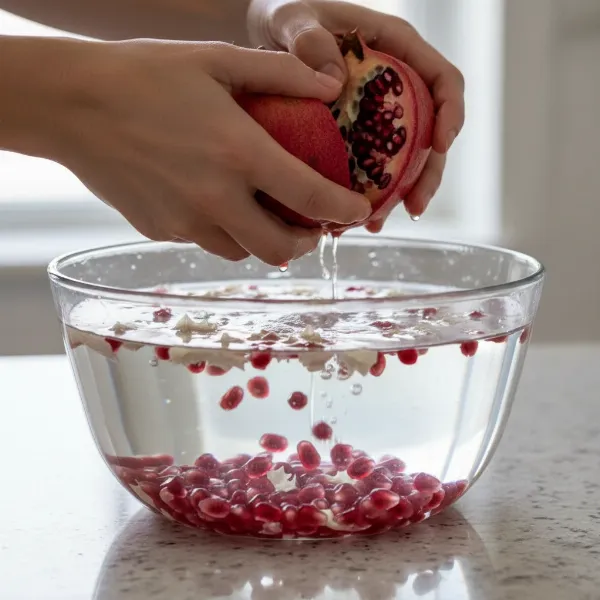 Hands deseeding a pomegranate in a bowl of water, separating arils from pith.
Top Methods to Juice Pomegranates Without the Splatter
Once your arils are separated, or your pomegranate is prepped, you’re ready to extract the juice. Different methods suit different needs and available kitchen tools, but all aim for a mess-free outcome.
The Citrus Press Method: Quick & Easy
For a straightforward approach that requires minimal fuss, treating a pomegranate like a large citrus fruit can be surprisingly effective.
- How it works: Simply cut the pomegranate in half horizontally. Place one half cut-side down onto a manual citrus press or countertop citrus juicer, just as you would an orange or grapefruit. Apply steady, even pressure. The juice will flow into the collection cup, leaving most of the membranes and seeds contained.
- Pros: This method is fast, requires no prior deseeding, and keeps the mess largely confined to the juicer itself. It’s excellent for a quick glass of juice.
- Cons: You might not extract every single drop of juice, and some pulp might make its way into your glass, requiring a quick strain if you prefer perfectly smooth juice.
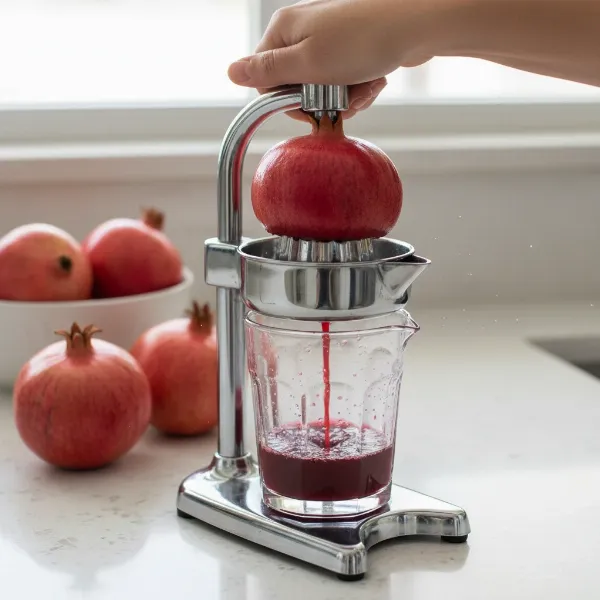 Half a pomegranate being pressed in a manual citrus juicer, juice flowing into a cup.
The Rolling Pin & Bag Method: No Special Tools Needed
This ingenious method is perfect if you lack a juicer and want to avoid any potential splash. It’s contained and incredibly effective for mess prevention.
- How it works: After deseeding your pomegranate (preferably using the underwater method), place the arils into a sturdy, sealable plastic bag (a freezer bag works best due to its thickness). Lay the bag flat on a cutting board. Using a rolling pin, gently but firmly roll over the arils, crushing them to release their juice. Once all the juice has been extracted, snip a small corner off the bag and pour the juice directly into a glass or measuring cup.
- Pros: This is arguably the cleanest method, as all the juice is contained within the bag, preventing any splatters. It requires no specialized equipment beyond a rolling pin and a bag.
- Cons: It can be more labor-intensive and may not yield as much juice as a powerful juicer.
The Blender & Strainer Technique: Smooth & Efficient
If you own a blender, this method offers a good balance of yield and ease, though it requires an extra straining step.
- How it works: Place your deseeded pomegranate arils into a high-power blender. Add a small splash of water (about 1/4 cup per pomegranate) to help the blades move. Pulse the arils a few times, just enough to break them open and release the juice. Avoid over-blending, which can pulverize the bitter white pith from the seeds and make your juice cloudy and astringent. Once pulsed, pour the mixture through a fine-mesh sieve set over a bowl, using the back of a spoon to press against the pulp and extract as much juice as possible.
- Pros: This method extracts a good amount of juice and is relatively quick.
- Cons: It involves an additional straining step, and if not done carefully, over-blending can introduce bitterness.
Masticating Juicers: The Professional Approach
For those serious about juicing and seeking the highest yield with minimal effort and mess, a masticating (slow) juicer is an excellent investment.
- How it works: After deseeding the pomegranate, simply feed the arils into the juicer. Masticating juicers slowly press and grind the produce, efficiently separating juice from pulp, ensuring a clear, pure juice with virtually no mess.
- Pros: Masticating juicers provide the highest juice yield, the purest juice free of pulp and bitterness, and are incredibly clean to operate, as pulp and juice are separated into different containers.
- Cons: The initial investment for a high-quality masticating juicer can be significant.
Maximizing Juice Yield and Minimizing Waste
Regardless of the method you choose, a few tips can help you get the most out of your pomegranates and minimize waste. For the citrus press method, applying consistent, firm pressure and rotating the pomegranate half slightly can extract more juice. When using the rolling pin, ensure you roll over every aril multiple times. With the blender and strainer technique, pressing the pulp firmly against the sieve with a spoon or spatula is crucial for maximum extraction. Don’t be afraid to squeeze the remaining pulp in the strainer with your hands (wearing gloves, if desired) to get those last drops. The leftover pulp can be composted, adding nutrients back to the earth, or even dehydrated and ground into a powder for a subtle flavor enhancer in dishes.
Common Mistakes to Avoid for a Perfect Pomegranate Juice
Even with the right tools and techniques, common pitfalls can diminish your pomegranate juicing experience.
- Over-blending: This is perhaps the most frequent mistake when using a blender. Blending the arils for too long or at too high a speed will crush the tiny white seeds within the arils, releasing bitter compounds and turning your beautiful ruby juice cloudy and unpalatable. Always use short, sharp pulses.
- Ignoring ripeness: Under-ripe pomegranates will yield less juice and a more astringent flavor. Always choose fruits that are heavy and firm.
- Not cleaning immediately: Pomegranate juice can set quickly and stain surfaces. Clean any spills or splatters immediately with warm, soapy water to prevent permanent marks.
Conclusion
Juicing pomegranates doesn’t have to be a daunting, messy chore. With the right approach, you can effortlessly transform these jewel-toned fruits into a refreshing, nutritious drink without a single splatter. Whether you opt for the simplicity of a citrus press, the ingenuity of a rolling pin and bag, the efficiency of a blender, or the professional touch of a masticating juicer, fresh pomegranate juice is now within your easy reach. Embrace these techniques and enjoy the vibrant flavors and health benefits of homemade pomegranate juice, stain-free and stress-free. Which method will you try first to unlock the delightful essence of the pomegranate?
Frequently Asked Questions
How do I remove pomegranate seeds without making a mess?
The most effective way to deseed a pomegranate without mess is the underwater method. Cut the pomegranate in half, then break it apart in a bowl of cool water. The arils will sink, while the white pith floats, allowing for clean separation and minimal splatter.
Can I juice a whole pomegranate in a regular juicer?
No, it is not recommended to juice a whole pomegranate (with its rind) in a regular juicer, as the rind can impart a bitter taste and may damage certain juicers. Always deseed the pomegranate and only juice the arils for the best flavor and to protect your appliance.
How can I make pomegranate juice without a specialized juicer?
You can easily make pomegranate juice without a specialized juicer by using a rolling pin and a sturdy plastic bag. Simply place the deseeded arils in the bag, roll over them to crush, and then snip a corner of the bag to pour out the juice, keeping everything contained.