As an experienced technician in the juicing world, I know the frustration of a once-mighty juicer starting to lag. You feed in fresh produce, anticipating a vibrant, nutrient-rich glass, but instead, you get slow extraction and wet, pulpy waste. Naturally, the question arises: can you sharpen juicer blades to restore that peak performance? The answer, like many things in the world of kitchen appliances, isn’t a simple yes or no. It depends entirely on the type of juicer you own and the components it uses to extract juice.
Understanding Your Juicer’s “Blade”
Before attempting any sharpening, it’s crucial to understand how your specific juicer operates, as the “blade” can vary significantly.
Centrifugal Juicers: The Grating Disc
Centrifugal juicers are known for their speed and typically feature a flat, circular grating disc at the base of the feed chute. This disc is lined with numerous tiny teeth or blades. As the disc spins at very high RPMs, it grates the produce into a pulp, which is then pressed against a mesh filter by centrifugal force to separate the juice. For these machines, the “blades” are these small, sharp teeth that shred fruits and vegetables.
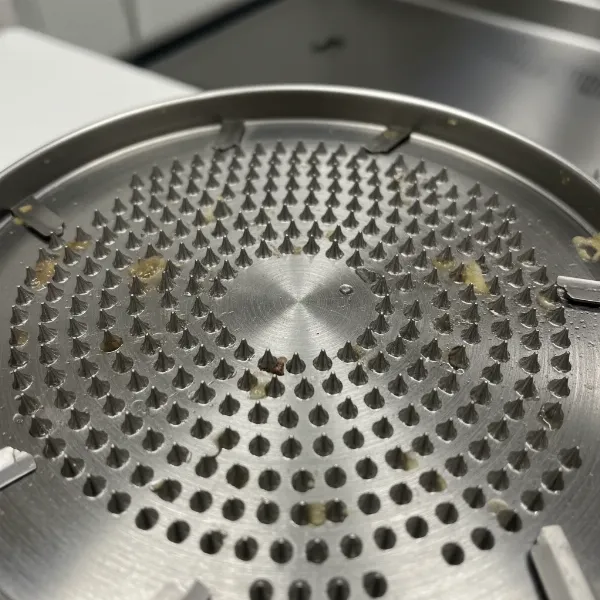 Close-up of a centrifugal juicer's grating disc with tiny sharp teeth for shredding produce.
Masticating (Slow) Juicers: The Auger
Masticating juicers, often called slow juicers or cold press juicers, operate differently. They use a single or twin auger (a large, heavy-duty screw) that slowly crushes and presses produce against a screen. This crushing and squeezing action extracts juice, retaining more nutrients and enzymes by minimizing heat and oxidation. Crucially, the auger in a masticating juicer does not have sharp cutting blades. Its function is to grind and press, not to slice. Therefore, an auger cannot be sharpened in the traditional sense.
Twin Gear Juicers
Similar to single auger masticating juicers, twin gear juicers use two interlocking gears to grind and press produce. These gears also lack traditional sharp blades and rely on a powerful crushing action to extract juice. As such, sharpening is not applicable to twin gear mechanisms.
Signs Your Juicer’s Performance is Lagging
How do you know if your juicer’s cutting components are dull or simply worn? Watch for these common indicators:
- Reduced Juice Yield: You’re getting less juice from the same amount of produce.
- Wet, Pulpy Waste: The pulp ejected into the waste bin is noticeably wetter than usual, indicating inefficient extraction.
- Increased Processing Time: Your juicer takes longer to process ingredients, struggling more than before.
- Excessive Noise or Vibration: The motor might strain more, leading to louder operation or unusual vibrations.
- Produce Struggles: Fruits and vegetables may not be fed through the chute as easily, requiring more effort from the pusher.
Can You Sharpen Centrifugal Juicer Blades? The Reality.
For centrifugal juicers, true sharpening is a nuanced topic. Unlike a chef’s knife that can be easily honed, the intricate design of a centrifugal juicer’s grating disc makes conventional sharpening challenging for the average home user.
However, professional sharpening services do exist for specific commercial-grade centrifugal juicers, like those from Nutrifaster or PURE Juicer. These services are equipped to restore the dozens of tiny teeth on the cutter plate, often recommended every 2-6 months for optimal performance in high-usage environments. For most home models, finding such a specialized service might be difficult or cost-prohibitive.
Attempting to manually sharpen these tiny blades requires immense precision to maintain their original factory angle, which is critical for efficient juicing. Incorrect angles can damage the blades further, reduce juicing efficiency, or even unbalance the disc, leading to increased vibration and potential damage to the motor.
DIY “Refreshing” for Centrifugal Juicer Grating Discs
While true sharpening of a centrifugal juicer’s grating disc is complex, there are methods to “refresh” its cutting effectiveness and improve performance at home. It’s important to set expectations: these methods aim to clean and provide a minor abrasive action, not to create a razor-sharp edge like a knife.
The Ice Method
This popular technique can help clean and gently abrade the tiny teeth on your centrifugal juicer’s grating disc.
- Clean Your Juicer: Ensure your juicer is thoroughly cleaned and free of any produce residue.
- Add Ice: Place a handful of ice cubes into the juicer’s feed chute.
- Run the Juicer: Turn on your juicer and let it process the ice cubes. The spinning ice acts as a mild abrasive, helping to remove any microscopic buildup and lightly “hone” the edges of the teeth.
- Repeat (if needed): You might repeat this process a few times.
- Clean Again: After processing, thoroughly clean the juicer to remove any ice fragments or metallic dust.
This method is generally safe and can offer a noticeable improvement in cutting efficiency by clearing blockages and providing a slight abrasive polish.
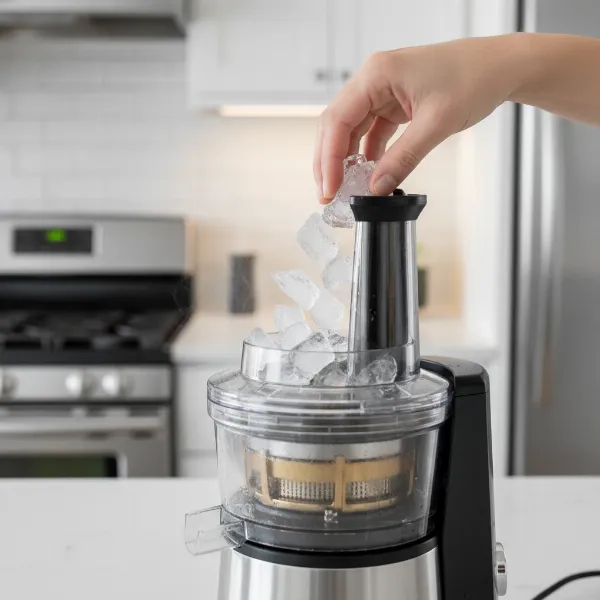 Hand adding ice cubes into a centrifugal juicer's feed chute for blade refreshing.
Careful Use of Fine Abrasives (Advanced/Risky)
For those with advanced DIY skills and the right tools, it is theoretically possible to attempt a more direct “sharpening” using fine-grit sandpaper or a Dremel tool with a suitable grinding attachment. However, this method comes with significant risks:
- Maintaining Angle: The greatest challenge is maintaining the precise original bevel angle of each tiny tooth. Deviating from this angle can make the blade less effective or even damage it.
- Safety: The blades are sharp, and power tools carry inherent risks. Always wear protective gloves and eyewear.
- Balance: Uneven sharpening can unbalance the rotating disc, causing vibration and stress on the motor.
For these reasons, this approach is not recommended for most home users. If you lack experience with precision sharpening, it’s safer to avoid this method.
What to Do When Your Masticating Juicer Slows Down
Since masticating juicers rely on crushing, their augers cannot be sharpened. If your masticating juicer’s performance declines, the issue is typically not dullness but wear and tear on its primary components.
- Thorough Cleaning: Residue buildup on the auger or inside the screen can significantly reduce efficiency. Ensure all parts are meticulously cleaned after each use.
- Inspect for Wear: Examine the auger for any signs of chipping, cracking, or significant abrasion. Check the juicing screen for holes, tears, or excessive wear.
- Replace Worn Parts: If the auger or screen are damaged or heavily worn, the solution is replacement, not sharpening. Most manufacturers offer replacement parts for their models.
General Maintenance to Extend Juicer Blade Life
Regardless of your juicer type, diligent maintenance is the best way to ensure longevity and consistent performance of its cutting or crushing components.
- Clean Immediately: Disassemble and wash all removable parts right after juicing. This prevents pulp from drying and hardening, which is much harder to remove and can dull or damage components over time.
- Avoid Hard Items: Do not put fruit pits, large seeds (like avocado seeds), or overly fibrous, hard materials (like whole ginger roots) into your juicer unless explicitly stated by the manufacturer. These can chip or bend blades/augurs.
- Proper Assembly and Disassembly: Always follow your juicer’s manual for correct assembly and disassembly. Forcing parts can lead to damage.
- Regular Deep Cleaning: Periodically soak removable parts in warm, soapy water or a mild descaling solution to tackle stubborn mineral buildup.
When to Consider Replacement Parts (or a New Juicer)
Even with the best care, juicer components will eventually wear out. Knowing when to replace parts or invest in a new machine is crucial.
- Ineffective Refreshing/Sharpening: If attempts to refresh your centrifugal juicer blades with the ice method yield no improvement, or if professional sharpening is unavailable for your model.
- Significant Damage: Visible chips, cracks, bends, or missing teeth on centrifugal blades, or significant damage to a masticating auger or screen, are clear indicators for replacement.
- Cost-Benefit Analysis: Compare the cost of replacement parts to the price of a new juicer. Sometimes, replacing multiple worn components can approach the cost of a new, more efficient model.
- Technological Advances: If your juicer is very old, newer models might offer significant improvements in yield, ease of cleaning, or durability that make an upgrade worthwhile.
Choosing a Juicer for Long-Term Performance
Investing in a juicer with durability and ease of maintenance in mind can save you headaches down the line.
- Material Quality: Look for juicers with high-quality, food-grade stainless steel components or heavy-duty, BPA-free plastics like Tritan. These materials tend to be more robust and resistant to wear.
- Replacement Parts Availability: Before purchasing, check if the manufacturer offers readily available and reasonably priced replacement parts for cutting discs, augers, screens, and other wear-and-tear components.
- Ease of Cleaning: A juicer that is easy to disassemble and clean thoroughly will naturally encourage better maintenance, prolonging the life of its parts. Consider models with wider feed chutes or fewer intricate nooks and crannies.
- Warranty: A good warranty can offer peace of mind regarding the longevity and performance of your juicer’s components.
“A well-maintained juicer isn’t just about prolonging its life; it’s about consistently achieving the best possible juice quality and yield. Prevention and understanding your machine’s mechanics are far more effective than trying to fix a deeply worn part.”
Conclusion
The question of how to sharpen juicer blades has a nuanced answer: for masticating and twin gear juicers, it’s not possible, as their augers crush rather than cut. For centrifugal juicers with grating discs, true sharpening is a specialized task, though DIY “refreshing” with ice can offer some improvement. Ultimately, understanding your juicer’s mechanism, prioritizing consistent cleaning, avoiding hard produce, and knowing when to replace worn components are the most effective strategies for maintaining optimal juicer performance. Don’t let a tired juicer sit in the cupboard; with the right approach, you can keep those fresh juices flowing! What’s your top tip for keeping your juicer in prime condition?
Frequently Asked Questions
How often should I sharpen my juicer blades?
For most home centrifugal juicers, regular “sharpening” is impractical. Instead, focus on refreshing with the ice method monthly or as needed. Commercial centrifugal juicers may require professional sharpening every 2-6 months depending on usage.
Can I use a knife sharpener on my juicer?
No, a standard knife sharpener is not suitable for juicer blades. Knife sharpeners are designed for single, broad blades and cannot precisely handle the tiny, intricate teeth of a centrifugal juicer’s grating disc without damaging them or creating an incorrect angle.
Why is my juicer making wet pulp?
Wet pulp is a primary sign of inefficient juicing, often due to dull or worn blades/augers. It indicates that the machine is not extracting as much juice as it should, leaving more liquid in the discarded fibrous material.
How long do juicer blades last?
The lifespan of juicer components varies greatly by type, usage, and material quality. Centrifugal grating discs can last several years with proper care, while masticating augers and screens also have a long lifespan but may require replacement after extensive use if visible wear or damage occurs.